
Lead
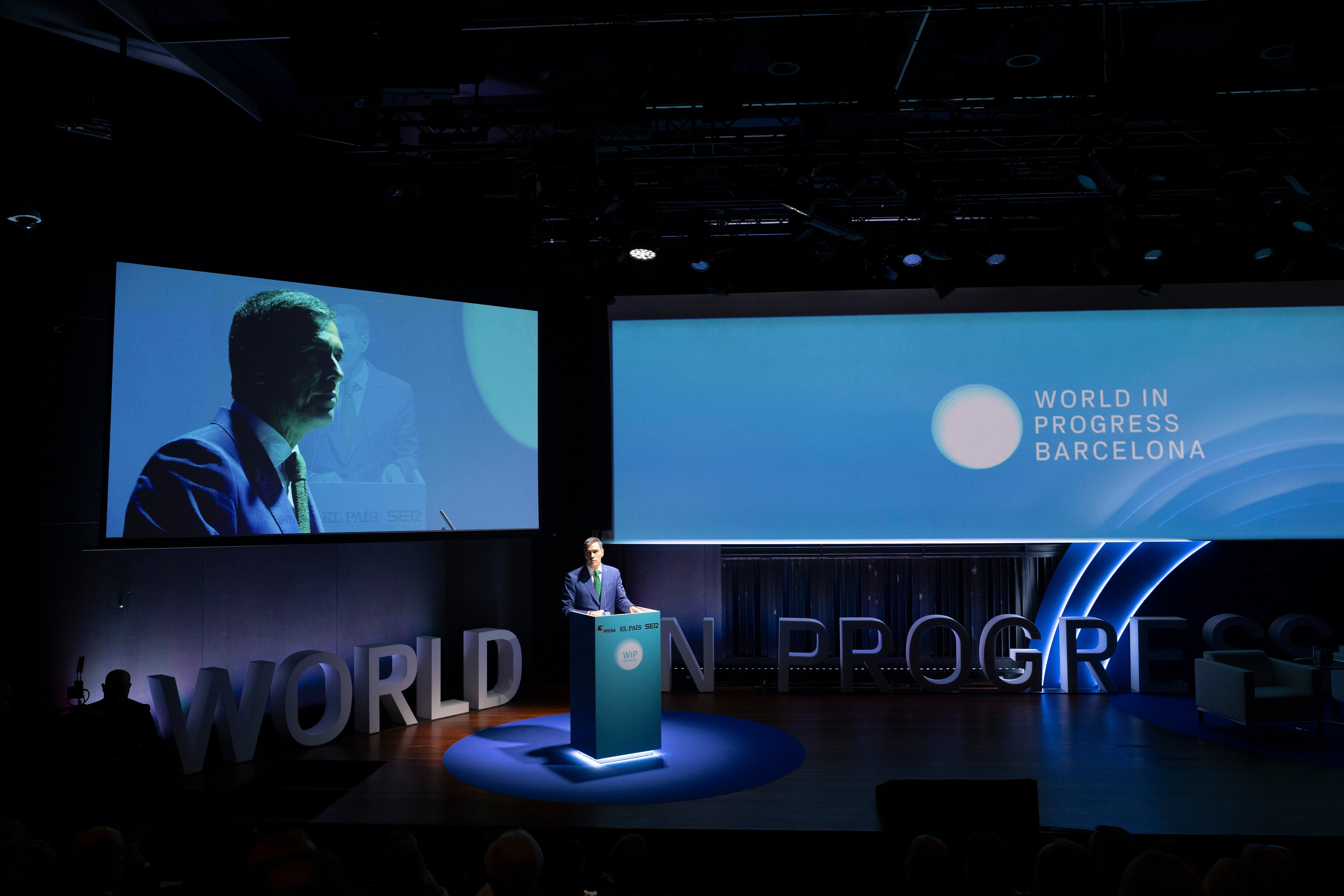
In a time of deep global uncertainty, where economic crises, geopolitical tensions, and climate challenges threaten the international order, the third edition of the World in Progress forum is being held in Barcelona. Organized by the PRISA Group, this event seeks to foster dialogue among political leaders, entrepreneurs, and intellectuals to identify key elements of progress in a world undergoing constant transformation.
The forum, which takes place annually in the Catalan city, does not aim to present definitive solutions, but rather serves as a meeting space where high-level figures share reflections, experiences, and perspectives on current challenges and the possibilities for social, economic, and environmental transformation. Although specific details about the participants have not been revealed, it is known that the event brings together recognized figures across various fields of knowledge and public action.
Contextualization of the Event
The PRISA Group, one of Spain's leading media groups, has established a significant presence in the field of public opinion formation in recent years. Through its media outlets, such as El País, El Mundo, and other publications, the group has developed an editorial line that prioritizes critical analysis of global and national issues.
The World in Progress forum was established as a response to the need for dialogue spaces between real-world actors and critical thinkers. In its first edition in 2024, it focused on the role of institutions in managing crises. In 2025, the focus expanded to include the impact of technological innovations and the role of entrepreneurs in building sustainable solutions. The third edition, taking place in 2026, aims to deepen the analysis of how progress can be achieved in a world marked by inequalities, conflicts, and accelerated climate change.
The event takes place within a global reality in which tensions between powers, development inequalities, and the vulnerability of economic systems have generated a growing sense of disorder. Although no official figures have been presented on the forum's direct impact, its format—based on open debates and expert discussions—allows participants to build a shared vision of the possibilities for progress.
Objectives and Focus of the Forum
According to the summary published by El País, the main objective of the forum is to promote dialogue among prominent politicians, entrepreneurs and intellectuals. This multidisciplinary approach allows different perspectives to intersect, ranging from political analysis to technological innovations and sustainable development proposals.<\/p>
The forum does not have a fixed agenda or predefined format, which allows great flexibility in the development of topics. Discussions typically begin with a brief presentation by each participant, followed by open exchanges where points of convergence and divergence are explored. This format promotes a more dynamic discussion and less emphasis on the imposition of pre-established ideas.<\/p>
Topics addressed in previous editions have included crisis management, innovation in key sectors such as health and education, and the role of cities in climate change. Although the specific topics of this third edition have not been detailed, it is expected that the focus will remain on seeking practical and viable solutions for communities and governments.<\/p>
Participants and representatives
Available sources do not provide a complete list of participants, nor details about their official positions or institutions. However, PRISA Group has indicated that the forum includes representatives from governments, international institutions and private sectors.<\/p>
The fact that the event includes entrepreneurs and intellectuals reflects a strategy of including voices that are not always present in traditional political spaces. This approach aims to break down barriers between the world of action and the world of reflection, creating a space where ideas can be validated based on their practical applicability.<\/p>
Intellectuals participating are typically researchers or academics with experience in areas such as economics, international politics or environmental science. Entrepreneurs, on the other hand, represent initiatives that have emerged in response to real needs, such as sustainability or social inclusion.<\/p>
Impact and global relevance
The forum World in Progress does not have an official structure that directly links it to government decisions or public policies. However, its relevance lies in its ability to generate networks of knowledge and to connect figures that might otherwise operate in isolated environments.<\/p>
In a context where media and digital platforms have expanded access to knowledge, events such as this play a key role in shaping a more critical and empowered public opinion. Although no quantitative studies have been conducted on the forum's impact, its presence in Spain's public opinion event calendar indicates that it is being recognized as an intellectual legitimacy space.<\/p>
Moreover, the fact that the event takes place in Barcelona, a city historically known as a center of thought and negotiation, adds symbolic value. Barcelona has hosted numerous international forums and high-level events, making it a strategic space for global dialogue.<\/p>
Challenges and limitations of the event
The forum faces certain inherent limitations related to its nature. First, it cannot be claimed that the debates generate tangible changes in public policies or government actions. The influence of a public opinion event is generally indirect and depends on the participants' ability to turn their reflections into concrete actions.<\/p>
Additionally, the open and unstructured format may lead to debates that do not reach a clear conclusion or that focus more on personal viewpoints than on shared solutions. This may limit the potential to generate consensus or collective action proposals.<\/p>
Another aspect to consider is the absence of quantitative data on the event's reach. No statistics have been published regarding the number of attendees, the reach of the content, or its impact on public opinion. This limits the ability to assess the forum's true impact on the global stage.<\/p>
Future vision and perspectives
While the forum World in Progress does not have an official projection of its evolution, its annual continuity suggests that PRISA Group sees this space as a tool for intellectual sustainability. The third edition, in particular, could mark a turning point if it decides to delve deeper into specific topics such as community resilience, social innovation, or the development of alternative economic models.<\/p>
The forum's future will largely depend on its ability to maintain a balance between intellectual rigor and public accessibility. If it succeeds in connecting complex ideas with clear language and concrete examples, it could become a reference point in discussions about global progress.<\/p>
In a world where responses to global challenges require collaboration across multiple sectors, the forum represents an example of how dialogue spaces can serve as a bridge between theoretical thinking and practical action. Although it does not produce immediate changes, its value lies in the construction of a community of thinkers who share a critical view of the current world.<\/p>
In conclusion, the forum World in Progress is not an event that resolves global problems, but rather offers a space for leaders of thought and action to gather and reflect on how to advance in a world in constant transformation. Its relevance does not lie in delivering solutions, but in the possibility of generating a dialogue that, although it does not always result in agreements, allows ideas to circulate and be validated in the public sphere.<\/p>