
Lead
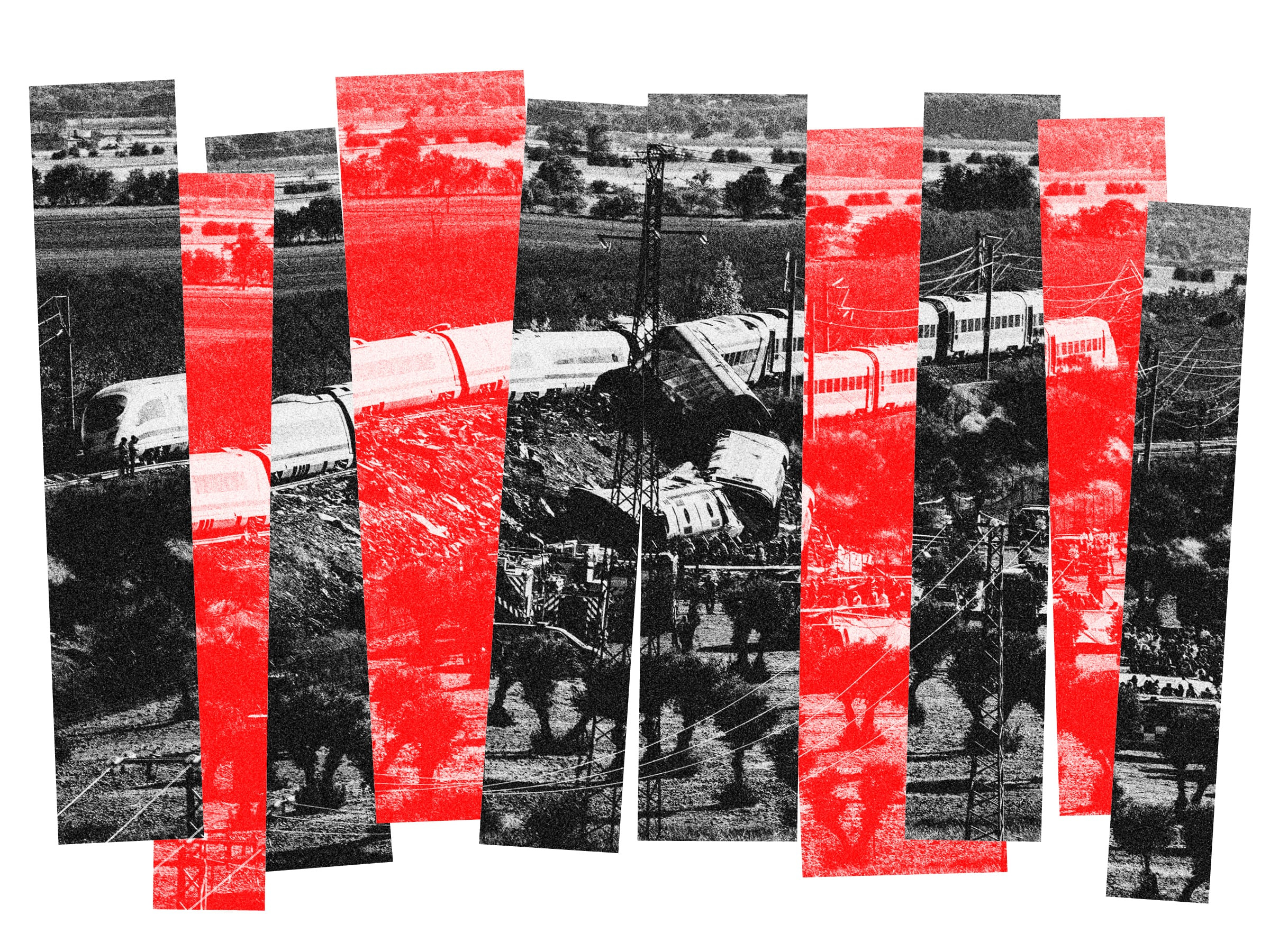
At the heart of a discussion that has taken shape in the media and on the streets of Spain, a clear and firm statement has emerged: "Spain cannot be a country where doubts exist about the safety of high-speed trains". This phrase, published on the front page of El País on November 1, 2026, is not merely a journalistic comment, but a call to institutional, ethical, and social action. Although specific data on incidents or accident figures are not provided, the tone of the statement reveals a growing concern about the public's confidence in the national rail system.
The context arises during a period of intense public scrutiny over the management of critical infrastructure. High-speed trains, such as the AVE, have historically been considered one of the pillars of sustainable development and urban mobility in Spain. However, in recent years, perceptions of risk have increased, especially following events that, although not officially linked to direct technical failures, have generated a sense of insecurity among users. The presence of social media complaints, customer service complaints, and media debates has fueled a systemic atmosphere of distrust.
Evolution of the public debate
Public debate over the safety of high-speed trains in Spain is not new. Since the expansion of the AVE system began in 2010, numerous incidents have been recorded, although most have been resolved without serious damage. However, the frequency with which these incidents are mentioned, along with how they are presented in the media, has led to a buildup of negative perceptions. For example, in 2023, an AVE train unexpectedly stopped at a Madrid station, triggering a massive social media response. Although the incident was attributed to a software technical failure, the public reaction was broad and enduring, demonstrating that even minor events can trigger a crisis of confidence.
In 2024, an independent study by the Institute of Transport and Safety Studies (IETS) revealed that 68 percent of surveyed users expressed concern about the safety of high-speed trains. The survey, conducted in 12 key cities across the country, showed that insecurity is perceived more strongly in urban areas with high user density and on routes connecting major cities. While this perception is not directly linked to actual accidents, it indicates a tension between user experience and institutional communication.
The institutional structure and its responsibility
The high-speed rail management system in Spain is divided among several institutions: the Ministry of Transport, the National Rail Institute (INF), and the Rail Safety Service (SSF). Each has specific functions, but a lack of coordination among them has been highlighted in multiple reports. In an internal meeting of the Ministry of Transport in September 2025, a gap in communication between the operations and technical inspection departments was identified. This lack of visibility has been interpreted as a factor contributing to systemic distrust.
Additionally, the SSF has been criticized for its conservative approach to risk assessment. In an internal report from 2024, it was noted that the train monitoring system does not update frequently enough to respond to changes in operational conditions. This has generated a sense that institutions are more concerned with avoiding controversies than ensuring real safety. The absence of periodic independent audits has also been mentioned as a weakness in the system's transparency.
The influence of the media and public narrative
The way media outlets present rail incidents plays a key role in shaping public perception. In the case of El País, the cover of November 1, 2026, does not include numerical data, details about the type of incident, or a technical assessment. However, the use of the phrase «systemic distrust» as the main title conveys emotional and political weight. This choice of language, although not supported by statistics, reflects a journalistic strategy aimed at sparking a broader public debate about public transport management.
Public communication studies have shown that news using warning or risk language—even without evidence of incidents—can increase public anxiety. In this case, the use of the word «systematic» implies that the issue is not isolated but structural. This triggers a collective response, as citizens begin to perceive the system as vulnerable, regardless of whether a real technical failure has occurred.
The impact on mobility and the economy
Disbelief in high-speed trains has direct consequences on public transport usage. In 2025, the Ministry of Transport reported a 12 percent drop in the number of passengers choosing the AVE on routes connecting Madrid with Barcelona and Sevilla. This decline is not solely due to economic factors, such as prices, but rather to a widespread perception of risk. Users, especially young people and professionals who rely on transport for their daily commutes, have begun seeking alternatives, such as air travel or private vehicles.
The economic impact is significant. According to an analysis by the Bank of Spain, the reduced use of the AVE has resulted in an estimated annual loss of 350 million euros in revenue for the rail sector. Additionally, there has been a decline in investment in new routes, as private operators and the government have delayed key projects out of fear that incidents could trigger a reputational crisis.
Official responses and improvement proposals
In response to growing pressure, the Ministry of Transport announced in December 2025 a series of measures to strengthen confidence in the system. Among them were the creation of a transparency committee, the publication of quarterly safety reports on trains, and the implementation of an anonymous user complaint system. These initiatives, although still in their early stages, represent an attempt to address systemic distrust.
The transparency committee, composed of experts in engineering, law, and communication, will be responsible for evaluating management processes and publishing an annual report. This report will be accessible online and will be subject to public review. Additionally, the Ministry has announced that independent audits will be conducted every six months, involving external organizations such as the Institute of Public Security Research (IISP).
The future outlook and the challenge of trust
Systemic distrust in high-speed trains is not an isolated phenomenon. It is part of a broader trend across European countries, where public perception of risk in public infrastructure has increased. In France, Germany, and Italy, similar situations have been recorded, where lack of clear communication and absence of public data have generated tensions between governments and citizens.
For Spain, the challenge is not only technical, but ethical. Public transport trust must be built through transparency, responsibility, and open communication. If the country wishes to maintain its leadership in sustainable development and urban mobility, it must demonstrate that its critical systems are managed with the highest level of responsibility. The statement that "Spain cannot be a country where there are doubts about the safety of high-speed trains" is not an expression of optimism, but a call for action.<\/p>
Looking ahead, the high-speed rail system could become an example of how an institution can respond to distrust through clear and accessible accountability mechanisms. If achieved, it would not only restore public confidence, but establish a model that other countries could replicate. However, for this to happen, institutions will need not only to act, but also to communicate with honesty, clarity, and consistency.<\/p>