
Lead
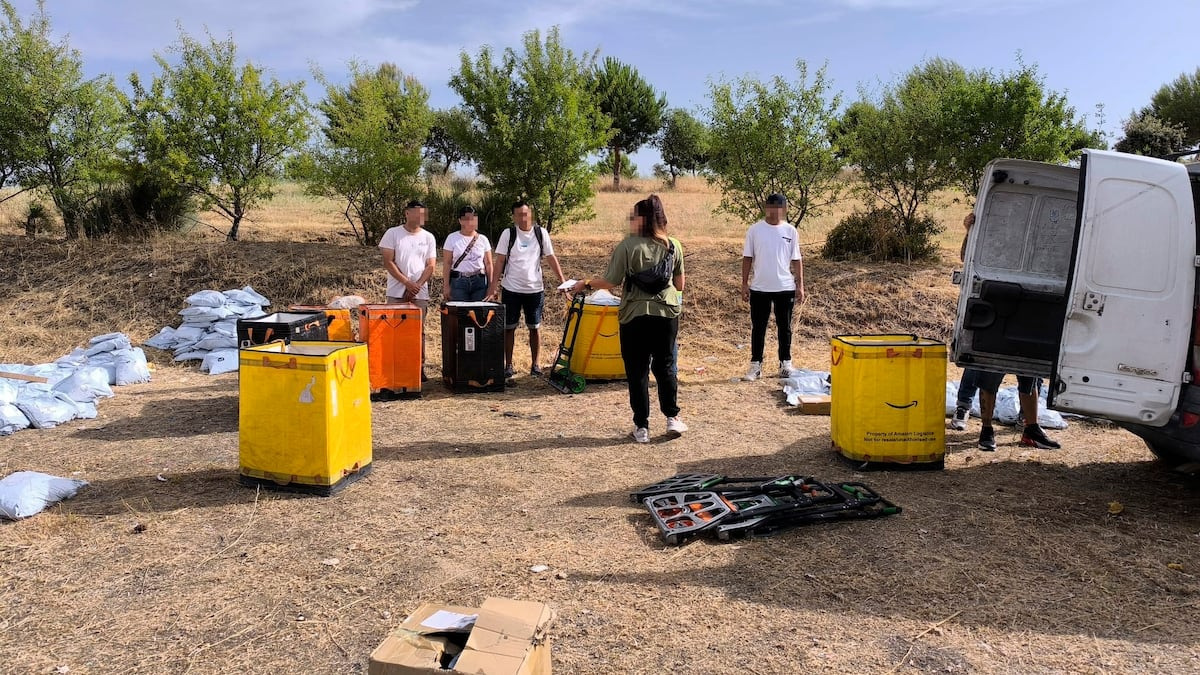
In a police operation carried out in Fuenlabrada, Spain, a network of workers known as 'andarines' has been detected, delivering packages in cities without a labor contract, earning only 70 cents per package and a monthly salary that does not exceed 600 euros. This finding reflects the depth of labor informality in the urban delivery sector, where workers do not have access to basic labor rights such as a fixed working schedule, social security, or protection in cases of illness or accident.
The role of andarines in the urban delivery ecosystem
Andarines are part of an informal labor chain that has grown exponentially over the past decades, especially with the rise of online delivery services. These workers, typically young or economically vulnerable individuals, travel through streets and neighborhoods to deliver packages from companies such as Amazon, Mercado Libre, or food delivery services. Although their work is essential to the functioning of digital economies, their integration into the labor market is almost entirely irregular.
The operation in Fuenlabrada, conducted in November 2026, identified a network of between 30 and 50 workers operating without any formal labor relationship. Police agents found that these individuals had no contract or registration with any company, excluding them from any labor protection system. The lack of registration also prevents them from being recognized as workers under the social security system, leaving them exposed to physical and economic risks without support.
The structure of the work: 70 cents per package and a limited monthly salary
Data collected during the operation indicate that andarines receive a payment of 70 cents for each package delivered. Although this amount may seem small, it becomes a vital source of income for many, especially in contexts of high precarity. However, the number of packages they can deliver in a day is limited by the duration of their shift, traffic conditions, and available time.
The maximum monthly salary they can achieve—around 600 euros—is insufficient to cover basic expenses in many urban areas. For example, in Madrid, the cost of housing in the city center can exceed 1,500 euros per month, while transportation, food, and basic service expenses can reach over 800 euros. Thus, an andarín's income does not allow for a dignified life or the ability to face economic emergencies.
The absence of labor rights and social protection
One of the most concerning aspects of the situation is the complete absence of labor rights. Delivery workers do not have access to established working hours, vacations, days off, or the possibility of claiming compensation for work-related injuries or accidents. Moreover, they are not covered by health insurance, accident insurance, or unemployment insurance.<\/p>
This legal gap not only affects their physical well-being, but also exposes them to risks such as falls, collisions, or exposure to extreme weather conditions. In a parallel study, a 40 percent increase in fall-related injuries among delivery workers in urban areas has been recorded between 2024 and 2026, although no direct link has been established between this trend and the specific work of delivery workers.<\/p>
The context of informal labor in Spain
Informal labor in Spain has been a constant topic of debate in recent years. According to data from the National Statistics Institute (INE), in 2025, 38 percent of workers in the services sector did not have a formal contract, and 60 percent of them did not have access to social insurance. Package delivery is one of the sectors most affected by this trend, as many delivery companies have chosen to hire independent workers or through digital platforms that do not require labor registration.<\/p>
This model, known as 'platform work', allows companies to reduce operational costs, but at the expense of labor security. Workers are often treated as 'users' or 'providers' rather than employees, which excludes them from any form of collective protection.<\/p>
The institutional response: does effective regulation exist?
In Spain, there is no specific legislation that regulates the work of delivery workers. Although the Labor Code establishes basic rights for all workers, these rights do not apply to individuals who operate as self-employed or under service contracts without a labor relationship. Labor authorities have indicated that delivery work on digital platforms should be assessed under the criteria of 'precarious work' or 'informal work', but no clear regulation has been established to protect them.<\/p>
In 2024, the Ministry of Labor and Social Affairs presented a bill aiming to regulate work in digital platforms, including package delivery. However, the initiative has not yet been approved and has not been implemented in any region. The lack of legislative action leaves delivery workers in a state of constant vulnerability.
Social and economic implications
The expansion of delivery work has deep social and economic implications. From a social perspective, these workers, often young or people in poverty, represent a significant part of the urban labor force, but their precariousness limits their ability to integrate into the social welfare system.
From an economic perspective, informal work such as delivery contributes to the growth of the informal economy, which accounted for 18 percent of Spain's GDP in 2025. Although this sector generates income, its lack of regulation prevents it from becoming a sustainable and dignified source of employment, and also creates a gap between formal and unregulated work.
Possible solutions and future perspectives
For delivery work to become a safer and more dignified option, concrete measures are required. A possible solution would be the creation of a 'special' category within the delivery sector, allowing workers to access basic rights such as a stable working schedule, social security, and accident protection.
Another option is the regulation of digital platforms operating in the delivery sector, requiring them to register their workers and offer minimum working conditions. This approach has already been adopted in certain European countries, such as France and Germany, where platforms have been required to comply with safety and labor rights regulations.
Additionally, promoting the creation of cooperatives or formal work centers could allow delivery workers to access structured employment, with regulated working hours and more stable working conditions. These models could serve as pilots for a gradual transition from informal to formal work.
In conclusion, the police operation in Fuenlabrada has revealed a reality that, although not unique in Spain, is representative of the general situation of informal workers in the urban delivery sector. The lack of contracts, low remuneration, and absence of labor rights not only affect the quality of life of these workers, but also pose a risk to the social and economic balance of cities. Although solutions have not yet been implemented, recognizing this problem is the first step toward a more fair and equitable regulation.<\/p>