
Lead
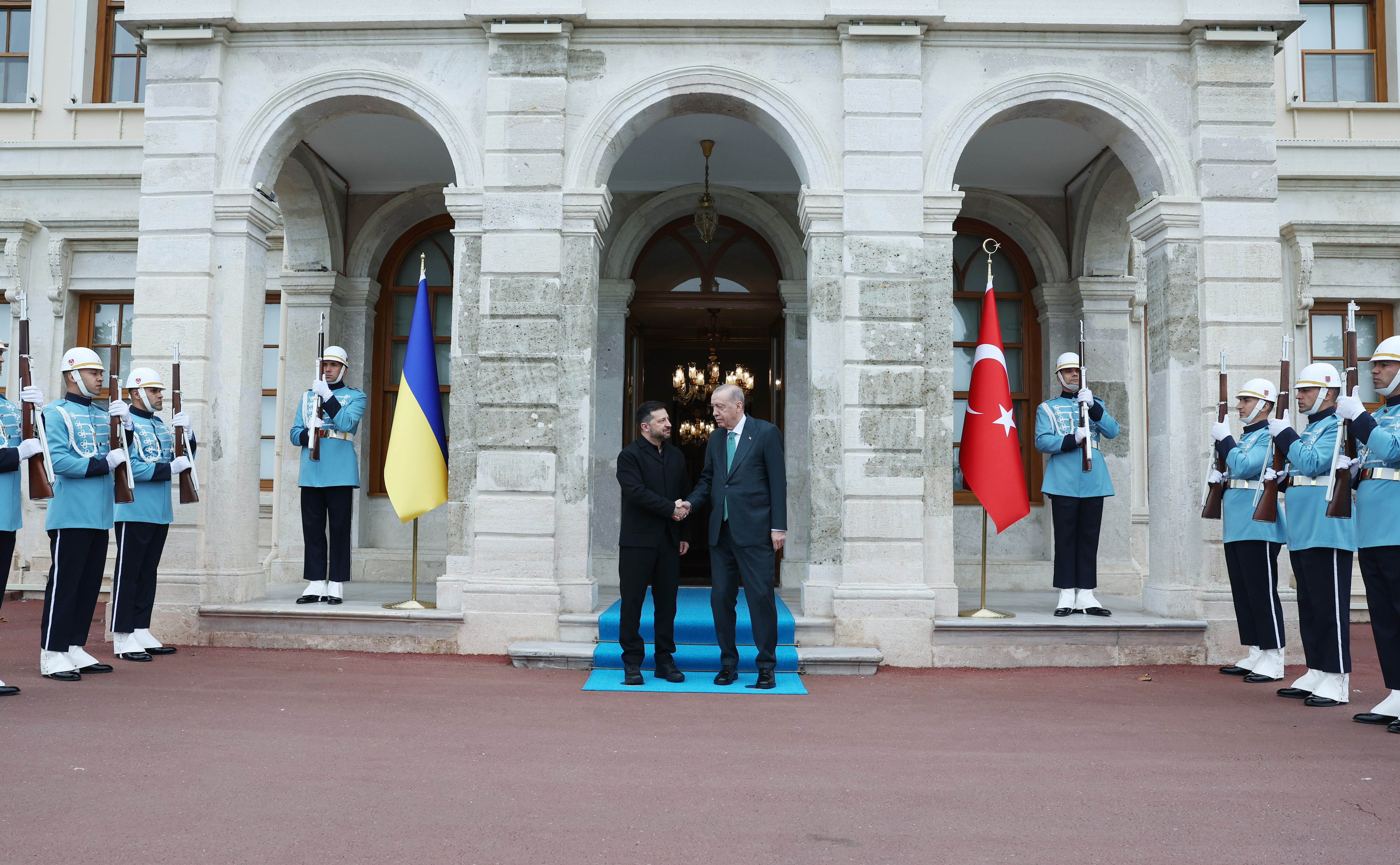
Within the context of an intense debate over the future of the conflict in Ukraine, Ukrainian President Volodymyr Zelenski stated in Istanbul that he is willing to meet with his Russian counterpart, Vladimir Putin, as part of a Turkish proposal to host a new round of negotiations between Russia, the United States, and Ukraine. The initiative, officially presented by Turkish representatives, aims to reopen dialogue among the parties involved in the conflict, while not compromising Ukraine's sovereignty or the conditions established by the Kyiv government.
Contextualization of the International Scenario
Since the conflict in Ukraine began in 2014, and especially following the 2022 attack, diplomatic dialogue between Russia and Ukraine has been interrupted by a series of military and diplomatic confrontations. Despite multiple mediation efforts by countries such as the United States, the United Kingdom, and Turkey, the parties have not reached a formal agreement on a ceasefire or on key issues such as occupied territory or the withdrawal of forces.
In this context, Turkey, which has played a key role as a mediator among the involved powers, has advanced a proposal to organize a new round of negotiations. The proposal, announced during a meeting in Istanbul, suggests that Ukraine could serve as the host for a joint meeting between representatives of Russia, the United States, and, in principle, President Zelenski.
The Turkish decision to propose a meeting in Ukraine is based on the recognition that the country is the central actor in the conflict, both geographically and through its role as Ukraine's ally in the United Nations and in the Security Council. Furthermore, Turkey has emphasized that the proposal does not imply any acceptance of specific conditions by Ukraine, but rather serves as an invitation to discuss potential solutions.
Volodymyr Zelenski's Position
Volodymyr Zelenski, during an official visit to Istanbul, expressed his willingness to meet with Vladimir Putin. In a public statement, the Ukrainian president affirmed that he is open to any dialogue that could lead to a peaceful resolution of the conflict, as long as Ukraine's sovereignty is respected and the safety of its citizens is guaranteed.
The statement was met with cautious reception by segments of the Ukrainian public, which have expressed concern that a direct meeting between Zelenski and Putin could be used as a tool to pressure Ukraine or to legitimize actions that violate its territory.
In a follow-up interview, Zelenski emphasized that any meeting must be preceded by a clear framework of principles, such as respect for human rights, a cessation of hostilities, and the withdrawal of foreign forces from Ukrainian territory. He also stated that Ukraine is not willing to accept conditions that would involve the loss of territory or subordination to Russian decisions.<\/p>
The Turkish proposal: objectives and conditions
Representatives from Turkey who presented the proposal in Istanbul stated that the main objective is to create a neutral and secure space for dialogue, where all parties can express their interests without direct external intervention. The proposal includes the possibility of the meeting taking place in Ukraine, which could be seen as a symbol of recognition of Ukraine's capacity to manage its own future.<\/p>
According to Turkish sources, the proposal does not require Russia or the United States to accept specific conditions, but rather opens a space for the parties to discuss possible solutions. Turkey has reiterated that it is not interested in imposing a result, but rather in facilitating a dialogue that allows the parties to reach a mutual consensus.<\/p>
The proposal also includes the participation of representatives from the United States, reflecting Washington's interest in maintaining an active diplomatic presence in the conflict. Although the exact format of the meeting has not been specified, it has been suggested that it could include a series of key topics, such as a ceasefire, troop withdrawal, and the management of conflict zones.<\/p>
International reactions
Reactions to the proposal have been mixed. The United States has expressed support for the initiative, highlighting that any dialogue among the involved parties must be open, transparent, and based on international principles. In an official statement, the Department of State affirmed that it is willing to participate in any meeting organized under conditions that respect Ukrainian sovereignty.<\/p>
On the other hand, Russia has not issued an official statement on the proposal, although it has maintained a stance of rejection toward any dialogue that involves accepting conditions compromising its national security. The Russian presidency has stated that any meeting must be preceded by a complete cessation of hostilities, a condition that has not yet been achieved.<\/p>
Among public opinion analysts, some have noted that the Turkish proposal could be a significant step toward normalizing the conflict, while others warn that the risk of it being used as a platform to negotiate conditions favorable to Russia is high.<\/p>
Implications for Ukraine
For Ukraine, the possibility of a direct meeting with Putin represents a critical point in its foreign policy. If approved, it could mark a shift in Kyiv's dialogue strategy, which until now has prioritized the defense of its sovereignty and cooperation with Western allies.<\/p>
The Ukrainian government has stated that any meeting must be preceded by a clear framework of principles, such as respect for human rights and the cessation of hostilities. Additionally, it has reiterated that it is not willing to accept conditions that would imply the loss of territory or subordination to Russian decisions.<\/p>
From a political standpoint, the proposal could generate tensions within the Ukrainian government, especially between sectors that defend a more firm stance toward Russia and others that consider that an open diplomatic approach could be beneficial in the long term.<\/p>
Challenges and limitations of the proposal
The Turkish proposal faces several significant challenges. First, the lack of a clear, pre-agreed framework of principles that all countries would accept makes any meeting unlikely to have real impact. Second, the absence of a guarantee that the parties will respect the agreements reached poses risks of using them as tools to pressure Ukraine.<\/p>
Moreover, the conflict in Ukraine remains deeply structural, with profound differences in views on security, territory, and sovereignty. The possibility that a direct meeting between Zelenski and Putin could be used to legitimize actions that undermine Ukraine's territorial integrity is a concern that has been expressed by several international policy experts.<\/p>
Finally, the involvement of the United States, although positive, does not guarantee that the country is willing to assume an active role in negotiations, especially if it is considered that a cessation of hostilities has not yet been achieved.<\/p>
Future perspectives
In the short term, the Turkish proposal could be evaluated as an initial step in rebuilding diplomacy among the involved parties. If approved, it could open the door to a series of more specific meetings on issues such as a ceasefire, troop withdrawal, or the management of conflict zones.<\/p>
In the medium term, the success of the initiative will depend on the ability of the parties to establish a framework of principles that all can accept. This would include respect for human rights, a cessation of hostilities, and Ukraine's sovereignty.<\/p>
In the long term, any progress in dialogue must be linked to regional stability and the prevention of future conflicts. The Turkish proposal, although modest, represents an attempt to reinvigorate diplomacy, which is essential to prevent the conflict from deepening over time.
In conclusion, Turkey's proposal for Ukraine to initiate a new round of negotiations with Russia and the United States is a significant step in the dialogue process. Although it faces important challenges, its implementation could open new possibilities for a peaceful resolution of the conflict, provided that the principles of sovereignty, human rights, and equity are respected.