
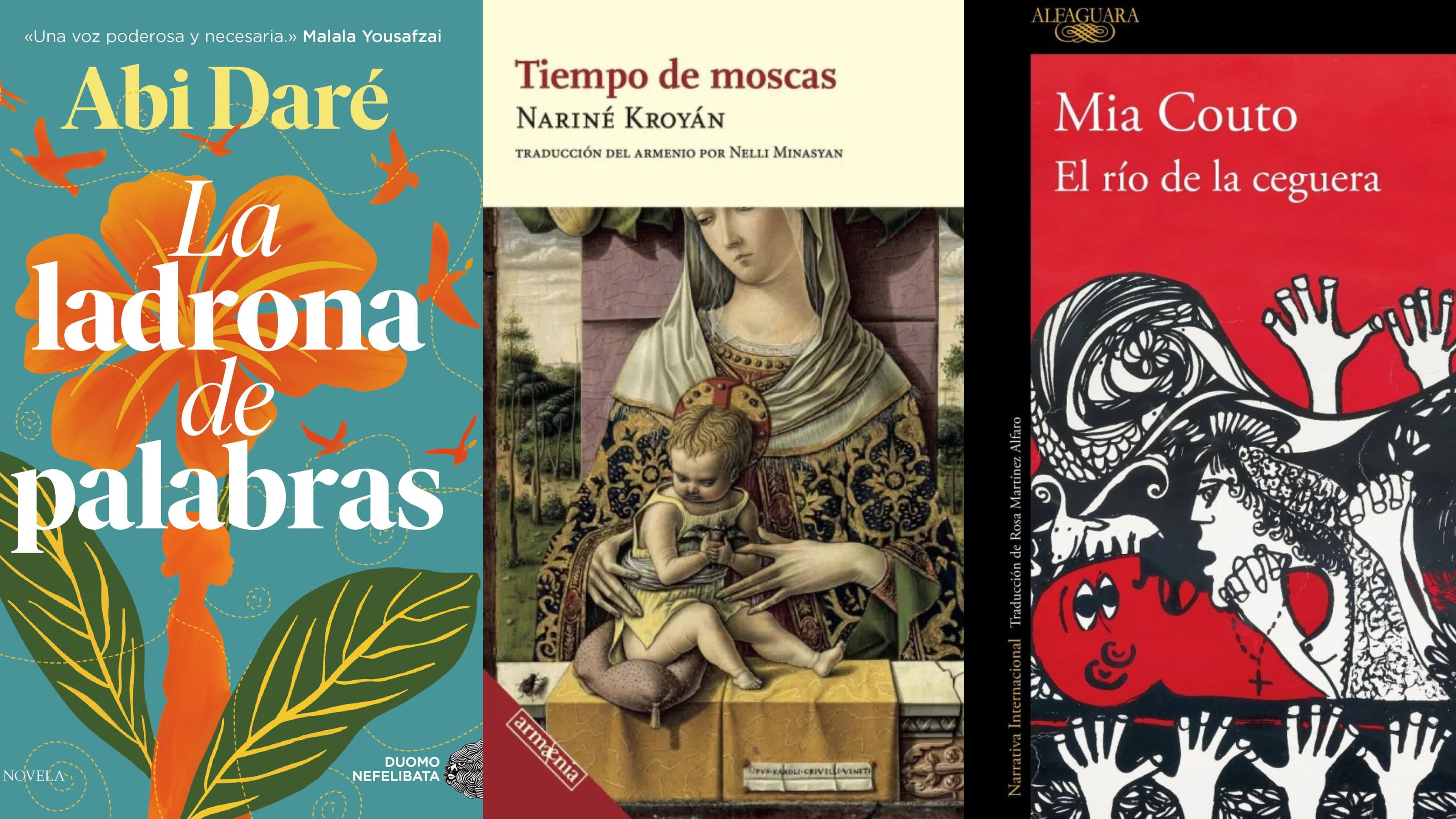
Lead
This autumn, five emerging novels and literary works invite readers to move beyond conventional literary maps and enter territories that have historically been ignored or marginalized: marginalized communities, conflict contexts, and the everyday realities of people who do not appear in dominant narratives. These stories, though not included in official lists of most-read or award-winning books, open a window into the present, showing how the open wounds of our era manifest in diverse and underrepresented voices.
The literary space of the margins
Literature has, throughout history, been a privileged space for reflecting social reality. However, many published and recognized narratives have focused on urban, white, male, and powerful contexts. This phenomenon has created a gap between what is told and what actually occurs in the most vulnerable communities.
Books emerging from the margins—such as rural areas, indigenous communities, ethnic minority groups, or populations affected by conflicts—do not always receive the same recognition. Despite the fundamental role these voices play in understanding the present, their presence in literary maps remains secondary.
The fact that these works are selected for reading this autumn is not merely an aesthetic choice, but a statement that literature must include multiple perspectives. By doing so, it breaks the idea that history must be narrated from a center of power and acknowledges that the global present is composed of interconnected realities.
The open wounds of the present
The works highlighted this autumn do not limit themselves to telling isolated stories. Instead, they explore open wounds affecting millions of people: economic inequalities, structural violence, forced migrations, social exclusion, and environmental displacement.
These wounds are not merely isolated events, but manifest in systems built upon the exclusion of certain groups. Literature that addresses them does not simply aim to document, but to offer a deeper understanding of how these conditions affect the daily lives of those who experience them.
For example, a work focusing on rural communities affected by desertification does not only describe the physical environment, but also narrates struggles over access to water, the loss of traditions, and social isolation. In this way, literature becomes a space of testimony and resistance.
A diversity approach in storytelling
One of the most significant aspects of these works is that they are not based on narratives of heroism or victory, but on the reality of those who live in conditions of vulnerability. The stories do not promise solutions, but instead offer an honest view of what it means to live on the margins.<\/p>
These narratives are often written by authors who belong to the communities they represent. This ensures that the experiences are authentic, not interpreted by third parties. The authenticity of the voice is key for readers to emotionally and ethically connect with the story.<\/p>
Moreover, many of these works do not follow conventional novel structures. Some are presented as short stories, essays, or diaries, reflecting the way marginalized communities communicate their experiences: directly, without excessive dramatization, and with a tone that respects the reality of the moment.<\/p>
The role of literature in collective consciousness
Literature is not just entertainment. It has a social and ethical role, especially when it addresses topics that are not at the center of media or public policy.<\/p>
By presenting these stories, readers are invited to question their own perceptions of the world. What do we really know about communities living in remote areas? What is missing from our narratives when we talk about<\/p>