
Lead
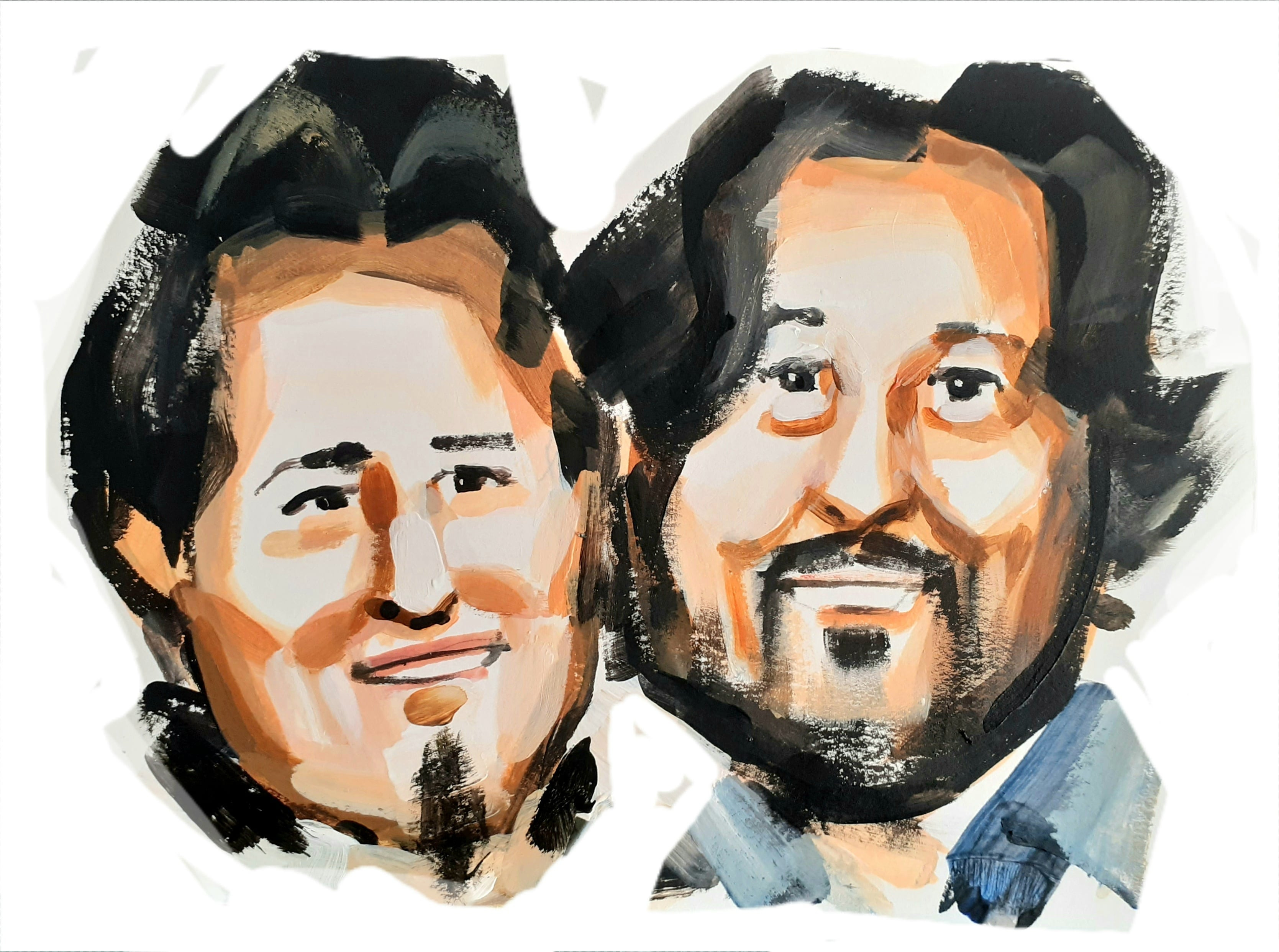
Palmer Luckey and Ben Lamm, two figures in the technology and entertainment world, have announced a collaboration to develop military canine units under the Warhound project. According to a cover story published by El País in its November 1, 2026 edition, both researchers are combining genetic engineering and defense technology with the goal of creating dogs equipped with advanced capabilities for military tasks. Although the project has not been validated by official institutions nor presented in governmental contexts, its announcement has generated interest in scientific and media sectors.
Contextualization of the Warhound project
Warhound is the name given to an initiative that, according to El País, seeks to integrate elements of genetic engineering and technological defense systems into dogs intended for military functions. The alliance between Palmer Luckey and Ben Lamm, known for their contributions to the technology and entertainment world—such as the creator of Oculus Rift and an investor in artificial intelligence startups—appears to represent an evolution of their previous interests toward more serious and technical applications.
The project has not been presented at official conferences, nor has it been documented in scientific publications or government records. However, its name and objectives have been cited in a cover story by El País, indicating that there is a public statement, although without technical or feasibility details.
The Warhound approach focuses on modifying dogs through genetic engineering techniques, possibly to enhance their physical, sensory, or response capabilities. Additionally, defense technologies such as sensors, communication systems, and possibly weaponry are integrated, although the scope of these applications is not specified.
Profiles of the protagonists
Palmer Luckey is an engineer and entrepreneur born in 1987, primarily known for being the founder of Oculus VR, a company that developed the first low-cost virtual reality device. Through his company, Luckey has been recognized as one of the pioneers in the virtual reality market. His career has included investments in emerging technologies, such as artificial intelligence and robotics.
Ben Lamm, on the other hand, is a technology investor and developer who has worked across multiple sectors, including artificial intelligence, autonomous vehicles, and defense systems. He is known for his involvement in startups exploring the use of advanced technologies in security and military operations. Although no detailed information has been published about his specific projects, his professional profile suggests prior exposure to high-performance technologies.<\/p>
The combination of Luckey and Lamm, although not officially documented, appears to be based on a convergence of interests: the development of technologies that blend entertainment with practical applications. Their experience in virtual reality and autonomous systems could be relevant to the design of dogs with advanced perception and mobility capabilities.<\/p>
Genetic engineering in the development of dogs
Genetic engineering is a discipline that allows the modification of the DNA of living organisms to achieve specific changes in their characteristics. In the case of dogs, this technology has primarily been explored in veterinary medicine contexts, such as treating genetic diseases or improving overall health.<\/p>
In the military domain, the use of genetic engineering in animals has been the subject of limited and ethical studies. For example, in the 20th century, experiments were conducted on dogs to evaluate their resistance to diseases or their ability to respond to extreme conditions. However, there are no official records of military applications that use genetic modifications in dogs for combat tasks.<\/p>
The Warhound project has not presented any scientific studies, ethical protocols, or laboratory tests. Therefore, it cannot be asserted that the use of genetic engineering in dogs is being validated by scientific or governmental institutions. The statements by Luckey and Lamm do not include data on the modification process, the organisms affected, or potential risks.<\/p>
Defense technology and its application in dogs
Modern defense technology includes sensor systems, wireless communication, pattern recognition, and navigation systems. These elements have been applied in vehicles, drones, and surveillance systems, but their integration into animals has been minimal.<\/p>
There are historical examples of dogs used in military tasks, such as explosive detection or tracking individuals. However, these dogs have not been genetically modified nor equipped with advanced defense technologies. Their training is based on learned behaviors, not biological or electronic modifications.
The Warhound project does not specify how these systems would be integrated into dogs. It does not mention the type of sensors, the range of communication, nor whether the dogs could operate in hostile environments or under extreme conditions. The lack of technical details makes the feasibility of the project uncertain.
Ethical and Legal Implications
The use of genetically modified animals in military contexts raises deep ethical concerns. International organizations, such as the UN and the OEA, have established principles that prohibit the use of technologies that alter animal biology in defense operations.
In 2023, the UN issued a statement indicating that any application of genetic engineering in animals must be evaluated based on ethical, safety, and environmental impact criteria. Furthermore, any animal experimentation must be conducted under scientific supervision and with the approval of competent authorities.
The Warhound project has not been assessed by international institutions. There is no information about the existence of an ethics committee, nor about the involvement of experts in biology or international law. This creates a gap between public statements and the adherence to existing standards.
Possible Perspectives and Future Scenarios
Although the Warhound project has not been validated by official sources, its presentation on the cover of El País suggests it may be in an initial development phase. It is possible that Luckey and Lamm are exploring conceptual ideas, such as design prototypes or virtual simulations, without having conducted any real experiments.
In the future, if the project advances, it could generate debates about the use of biological technologies in military environments. However, any practical application should be evaluated based on scientific, ethical, and legal criteria. Virtual reality, which was a field of interest for Luckey, could serve as a platform to simulate operational scenarios without the need to modify real animals.
It is important to emphasize that, as of now, there are no evidences that the Warhound project has been implemented in military environments, nor that it has been funded by governments or defense institutions. The absence of verifiable data on its development or outcomes means that the project remains within the realm of technological speculation.<\/p>
Conclusion<\/h2>
The alliance between Palmer Luckey and Ben Lamm to develop military canine units under the name Warhound represents a public declaration of a technological idea. Although the project has been mentioned in a cover story of El País, no technical details have been provided, nor have scientific studies, laboratory tests, or ethical evaluations been presented.<\/p>
The use of genetic engineering in dogs for military tasks is not supported by scientific evidence nor by international regulations. The application of defense technology to animals has also been scarce in the military domain. Therefore, the Warhound project must be understood as a conceptual initiative, not as a practical or viable application in the present.<\/p>
The report is based solely on the information available in the November 1, 2026 cover story of El País. No additional sources have been consulted, and no verification has been carried out regarding the current status of the project. Any interpretation about its feasibility, results, or impact must be made with caution and without unverified assumptions.<\/p>