
Lead
In a context where multiple cases of mushroom poisoning are recorded each year, mycology experts warn about the need for technical training and practical knowledge when collecting fungi in the field. Although interest in mushrooms as food or remedies has grown over the past decades, confidence in mobile apps that promise automatic species identification has proven insufficient and, in many cases, dangerous.
The latent risk of mushrooms: an invisible threat
Mushrooms are living organisms that, although some are edible, also contain toxic compounds that can cause severe symptoms or even death in certain species. According to data collected by Spain's Institute of Mycology, between 2020 and 2025 over 300 cases of mushroom poisoning were recorded nationwide, with a mortality rate exceeding 10 percent in untreated cases.
The problem does not lie solely in the incorrect identification of species, but in the false belief that a mobile app can provide a precise and safe response. Many users trust digital tools that, by analyzing images, propose identifications based on artificial intelligence algorithms, without considering ecological context, complete morphology, or genetic variability among species.
Why mobile apps are not reliable?
Mushroom identification apps, although have gained popularity on social media and gastronomy platforms, have not been scientifically validated for real-world use. An article published by El País in November 2026 notes that these tools often present identification errors that can be lethal. For example, an edible species such as Agaricus bisporus may be incorrectly classified as Pholiota nameko, a species that, although similar, may contain compounds causing severe gastrointestinal irritation.
Moreover, apps depend on the quality of the image uploaded by the user. A mushroom with a variable color, irregular shape, or texture that changes over time may be misinterpreted. In many cases, users do not have access to a microscope or morphological analysis tools, which limits the accuracy of diagnosis.
Safe collection principles according to mycology experts
Mycologists, such as Dr. Rafael Martínez, director of the Fungi Studies Center at the University of Barcelona, emphasize that safe mushroom collection must be based on technical knowledge, not digital technologies. Key principles include:
- Knowledge of the environment: Each mushroom species grows under specific soil, climate, and vegetation conditions. A mushroom that grows in moist forests cannot be collected in dry terrain.
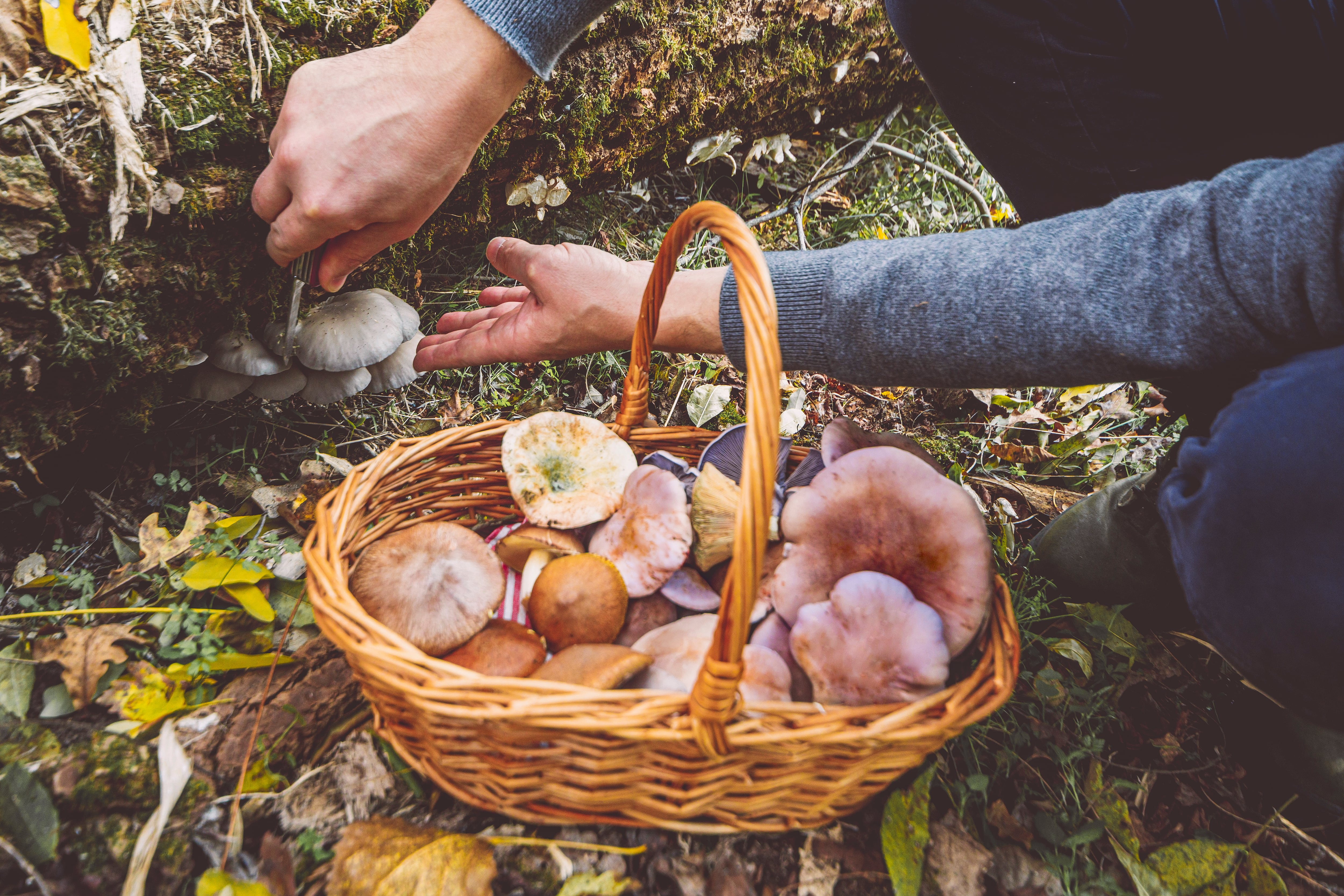
- Close observation: The shape, color, size, texture, and aroma of the mushroom must be studied, as well as its position on a plant or in the soil.
- Responsible collection: Mass extraction should be avoided, especially in protected natural areas, to preserve biodiversity.
- Recording and documentation: Each specimen must be recorded with date, location, weather conditions, and photographs that are not used for mobile applications, but rather for subsequent analysis.
These principles not only protect the collector but also contribute to maintaining natural ecosystems that depend on fungi as decomposers and nutrient recyclers.
Technical training as a key tool
Instead of relying on mobile applications, experts recommend that individuals interested in collecting mushrooms undergo technical training at mycology centers. These programs, which may include hands-on workshops, visits to natural parks, and theoretical classes, enable a holistic understanding of fungi as part of an ecosystem.
Dr. Martí-than explains that "mushroom identification is not a task that can be solved with a photo and a button. It is a process that requires experience, patience, and a deep understanding of the natural environment." Additionally, these programs often include instruction on distinguishing between edible and toxic species using microscopes, botanical guides, and morphological comparisons.
The role of scientific communities and local networks
In many countries, especially in Europe and South America, local mycological networks have been established that share knowledge and experiences. These communities, operating as study groups or associations, allow members to train together and validate identifications before collecting.
For example, in the Catalonia region, a system of "collection codes" has been established that sets rules for the use of fungi in natural areas. This system does not rely on technology, but on agreements among users who commit to not collecting in protected zones and to sharing verified information.
Implications for public health and environmental conservation
The growing reliance on mobile apps to identify fungi represents a risk to public health. If a user trusts an app that identifies a species as edible, but it is actually toxic, they may suffer poisoning requiring hospitalization or intensive treatment.
Moreover, unregulated mushroom collection can affect biodiversity. Many fungal species are key to ecosystem balance, as they decompose organic matter and help form fertile soils. Their large-scale extraction, especially in protected areas, may have long-term consequences.
What to do if there is uncertainty about a species?
When in doubt, experts recommend not collecting. Safety should come before convenience. If a species is not well understood, it is better to avoid it entirely. The practice of "not collecting without certainty" is a fundamental rule in mycology.
Mycology centers offer consultation services, where users can send samples or photographs to experts who, through morphological analysis, provide a safe assessment. These services, although slower, are much more reliable than the automatic responses provided by digital applications.
The future of mushroom identification: between technology and traditional knowledge
Technology will remain useful, but not as an automatic identification tool. In the future, mobile applications are expected to focus on education, not decision-making. For example, they could offer interactive guides that teach users how to observe a mushroom, how to take an appropriate photo, or how to interpret its characteristics.
These educational resources, combined with practical training, could help reduce the risk of poisoning without relying on algorithms that have not been scientifically validated.
In conclusion, avoiding mushroom poisoning does not depend on having an app on a mobile device, but on possessing technical knowledge, solid training, and respect for the natural environment. Mobile applications can be useful as supportive tools, but they should never replace scientific judgment and practical experience that only come from years of study and field observation.