
Lead
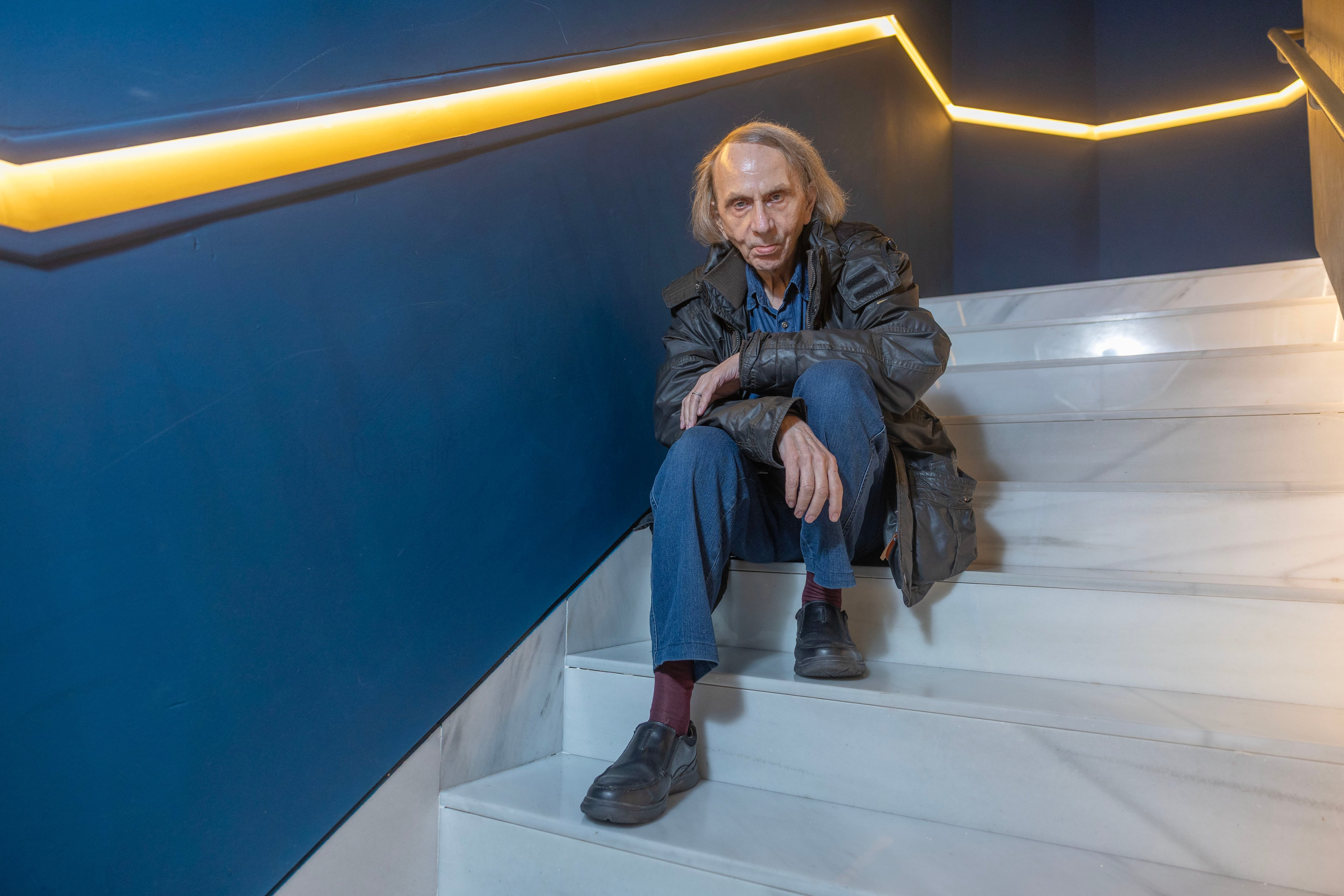
Michel Houellebecq, one of the most influential and controversial authors of 21st-century French literature, participated in the Ja! Festival in Bilbao on October 30. During his speech, the author of works such as Submission, Platform, and Annihilation expressed his discontent with the stigma of being labeled 'fascist writer', a label that, according to him, is exhausting but ultimately ends up being accepted as part of the reality of literary work in today's context.
The festival, which brings together writers, intellectuals, and artists from different countries, is one of the most important cultural platforms in Europe. This time, Houellebecq used the opportunity to address central themes of his work: the relationship between literature and politics, artistic creation as an act of resistance or challenge, and how writers are influenced by social and cultural changes.
The stigma of the 'fascist writer'
In his speech, Houellebecq stated that it is 'exhausting' to be called a 'fascist writer', a term that has been widely used in the media to refer to authors who defend political or social positions that do not align with the dominant traditions of contemporary society. Although the term is not officially defined, its use has expanded in public debates, especially in European countries with strong liberal and conservative traditions.
The French author explained that at first, this kind of label wore him down, as it reduced his work to a single political dimension, ignoring its philosophical, psychological, and social dimensions. However, over time, he has learned to accept that, in a world where literature is increasingly subjected to political debate, writers must face the risk of being categorized based on their positions, not on their artistic quality.
"One eventually comes to accept it," Houellebecq stated. This phrase, which was repeated several times during his speech, reflects a posture of acceptance toward the cultural polarization affecting intellectuals. For him, the role of the writer is not simply to create literary works, but also to become a dialogue agent, even when that dialogue is contentious or unpleasant.
Literature as a space of confrontation
During his intervention, Houellebecq emphasized that literature is not a neutral field. Unlike what is commonly believed, literary texts do not emerge in a vacuum, but are intimately linked to the social, economic, and political conditions of their time. For example, in works such as Submission, the author explores how social transformations—particularly those related to identity, gender, and religion—affect people in the contemporary world.
"Literature is not a refuge," Houellebecq said. "It is a battlefield where ideas, values, and worldviews clash." In this sense, the writer cannot avoid engaging in public debates, even if they are not always willing to do so. According to him, literary creation is an act that cannot be entirely detached from the social environment.
The author also noted that, in the case of his works, the goal is not simply to describe reality, but to question it. In Platform, for example, a critical view of political power and the structure of modern society is presented, while in Annihilation the role of the individual in an increasingly technological and dehumanized world is examined.
The relationship between politics and artistic creation
Houellebecq stressed that politics and literature are not separate fields. Although many readers tend to see them as distinct disciplines, the French author argues that literature is a form of politics, as it enables citizens to reflect on their values, decisions, and relationships with their environment.
"The writer is not a passive observer," he affirmed. "He is an actor who, through writing, influences how the world is understood." In this sense, literary works can serve as instruments of change, although it is not always clear what effect they have on society.
Moreover, Houellebecq pointed out that writers must have the freedom to express their ideas, even when these are controversial. In an environment where opinions are increasingly regulated by codes of conduct or institutional pressures, the role of the intellectual becomes more delicate. The author warned that, in some countries, merely writing about sensitive topics can expose the author to sanctions or social exclusion.
The context of the Ja! Festival in Bilbao
The Ja! Festival in Bilbao, which takes place annually in the Basque city, is one of Europe's most important cultural events. Since its founding in 1995, it has been a space for dialogue between artists, intellectuals, and the public, covering a wide range of topics from literature and cinema to music and visual arts.
This year, the festival focused on the role of intellectuals in the contemporary world, a theme that coincided with Houellebecq's participation. His intervention was part of a series of conferences that explored how thinkers and artists influence public opinion and political decisions.
The event, which gathered more than 10,000 people, also included other French and European authors, as well as cultural critics and academics. The presence of Houellebecq, an author both admired and criticized, generated a wide debate on social media and in the media, especially in Spain and France.
Public and media reactions
Houellebecq's intervention was received with a mix of enthusiasm and criticism. Some readers and critics highlighted his ability to express complex ideas with clarity and force, while others pointed out that his approach is too negative or hopeless.
In an article published by El País, it was noted that Houellebecq «does not limit himself to criticizing the world, but dissects it into its deepest components». This view, although controversial, has been recognized by many academics as one of the most original in contemporary French thought.
On social media, the debate about the stigma of the 'facha writer' spread rapidly. Some users expressed support for the freedom of expression that Houellebecq defends, while others argued that at the same time, his work can be seen as a form of dehumanization or despair.
The author did not directly respond to these criticisms during his intervention, but made it clear that his goal is not to provoke emotional reactions, but to open spaces for reflection. «I don't want my readers to be drawn to my writing as an act of hope», he said. «I want them to ask themselves: what really matters in this world?»
Implications for the future of literature
Houellebecq's participation in the Ja! Festival of Bilbao has important implications for the future of literature in Europe. In a context where media are increasingly polarized, the role of the writer as a dialogue agent becomes more relevant.
The French author has been a reference point in debates on the ethics of thought and the intellectual's responsibility for years. His work, although often interpreted as critical or hopeless, has been the subject of academic studies in universities around the world, especially in fields such as philosophy, sociology, and cultural history.
In this regard, his participation in the festival was not only a personal exhibition, but also a statement about the role of literature in an increasingly fragmented world. Although it cannot be claimed that his message has immediately changed public policy or public thought, his presence at an international event such as the Ja! Festival in Bilbao demonstrates that literature remains a vital field of debate.
For Houellebecq, literature is not a luxury, but a necessity. "It's not about writing to be read," he said. "It's about writing so that someone asks themselves: what really matters?" This phrase, repeated several times during his speech, highlights the fundamental goal of his work: not only telling stories, but questioning the world in which we live.
The festival concluded with a series of follow-up debates that addressed topics related to freedom of expression, the role of the intellectual in the 21st century, and the relationship between literature and politics. Although full details of these debates have not been published, it is known that they were widely followed by academics and readers around the world.
In conclusion, Michel Houellebecq's participation in the Ja! Festival in Bilbao was not just a literary exhibition, but an intellectual act of resistance. In a world where polarization and distrust are growing, his message—though critical—offers an alternative to silence, conformity, and evasion. By speaking about literature, creation, and politics, Houellebecq does not only defend his own work, but invites others to question the world around them.