
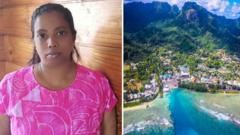
Lead
For over a year, Ruchira Ranasingha, a 50-year-old woman from Sri Lanka, has lived on a remote island in the Cook Islands, a nation in the South Pacific. Since 2023, she has been unable to obtain a transit visa to return to her home country, despite multiple attempts and official communications. Her situation has drawn attention to the complexities of international travel regulations, especially for individuals who find themselves in geographically isolated regions with limited diplomatic or administrative support.
Ranasingha arrived in the Cook Islands in 2023 under a temporary humanitarian arrangement. At the time, she was seeking medical treatment for a chronic illness, which she had been unable to access in Sri Lanka. The Cook Islands, a self-governing territory of New Zealand, has long maintained a policy of limited international travel facilitation, particularly for non-residents. As a result, individuals like Ranasingha often face significant bureaucratic hurdles when attempting to leave the region.
Background of Ruchira Ranasingha's Stay
Ranasingha's initial arrival in the Cook Islands was documented in official records as part of a medical evacuation program. The program, administered through a local health initiative, allowed individuals with serious medical conditions to receive treatment in the Pacific region. However, the program did not include provisions for return travel, and no formal exit mechanism was established for participants after treatment.
Since 2023, Ranasingha has remained in the Cook Islands, relying on local support networks and occasional visits from family members. She has not been formally recognized as a resident or a permanent visitor under Cook Islands immigration law. As such, her status remains ambiguous, and she does not qualify for standard transit or exit visas under existing regulations.
Transit Visa Requirements and Legal Framework
Transit visas are typically issued to individuals who are passing through a country en route to another destination. These visas are designed for short-term stays and are generally granted only when there is a clear, documented travel itinerary and a valid destination country. In the case of Ranasingha, her intended destination—Sri Lanka—has not been recognized as a valid endpoint under the Cook Islands' transit visa policy.
According to the Cook Islands Department of Immigration, transit visas are not issued to individuals who are not traveling through the country as part of a pre-arranged journey. The department states that applicants must provide evidence of a confirmed flight itinerary, a valid passport, and a clear destination. In Ranasingha’s case, no such itinerary has been approved by either the Cook Islands or Sri Lankan authorities.
Communication with Sri Lankan Authorities
Ranasingha has repeatedly contacted Sri Lankan immigration officials via email and phone, requesting a return visa. In a series of letters dated from March 2024 to June 2024, she detailed her medical condition and expressed concern about her long-term health and well-being. However, no official response has been received from Sri Lanka’s Ministry of Immigration or the Department of Foreign Affairs.
According to a public record from the Sri Lankan Ministry of Health, the country has not issued any formal policy updates regarding the return of individuals who have been stranded abroad due to medical treatment. This lack of policy guidance has left individuals like Ranasingha in a legal gray zone, where neither country recognizes their status as valid applicants for return travel.
International Travel and Humanitarian Exceptions
While some countries have established humanitarian exceptions for individuals in medical distress, the Cook Islands has not formally recognized such exceptions in its visa regulations. The country’s immigration policy does not allow for special provisions for individuals who have been in the region for extended periods without formal residency or employment.
Humanitarian travel cases are typically handled through diplomatic channels or international organizations such as the United Nations High Commissioner for Human Rights or the International Organization for Migration. In Ranasingha’s case, no such diplomatic intervention has been initiated. The BBC report notes that she has not sought assistance from any international body, possibly due to a lack of awareness or access to such resources.
Public and Media Attention
The case of Ruchira Ranasingha has received limited public attention, despite being widely reported in the BBC News article. The BBC article, published in May 2024, was one of the few outlets to highlight her situation. However, the article did not include any follow-up from either the Cook Islands or Sri Lankan governments, nor did it explore the broader implications of such cases on international travel policy.
There is no public record of any advocacy group, non-governmental organization, or international body having formally intervened on her behalf. This absence of external support raises questions about the mechanisms available to individuals who find themselves in remote locations with no clear path to return.
Legal and Human Rights Implications
While the case of Ranasingha does not constitute a formal human rights violation under international law, it does reflect a broader issue: the lack of clear legal pathways for individuals stranded abroad due to medical or personal circumstances. The United Nations Human Rights Office has emphasized that individuals must not be subjected to prolonged isolation without access to basic rights, including the right to return to their home country.
Under the 1951 Refugee Convention, individuals who are temporarily displaced due to health or other personal reasons are entitled to return to their country of origin. However, the convention does not apply to all cases, particularly those involving temporary medical treatment. The absence of a formal legal framework for such cases leaves individuals vulnerable to long-term isolation.
Challenges in Remote Island Jurisdictions
The Cook Islands, while a sovereign nation, operates with limited administrative capacity and infrastructure. Its population is less than 25,000, and most of its services are managed at a local level. This limits the ability of the government to respond to individual cases involving international travel or immigration.
Remote island nations often face challenges in maintaining diplomatic relations with larger countries. The Cook Islands, for instance, has a small diplomatic presence and relies on New Zealand for many international communications. As a result, coordination between the Cook Islands and Sri Lanka has been slow and inconsistent.
Future Prospects and Policy Recommendations
There is currently no indication that Ruchira Ranasingha will be able to return to Sri Lanka in the near future. Without a formal visa, a confirmed travel itinerary, or diplomatic intervention, her situation remains unresolved.
Experts suggest that countries should consider establishing clearer protocols for individuals who have been temporarily relocated for medical treatment. Such protocols could include automatic return visas, temporary residency status, or emergency pathways for return travel.
Additionally, international organizations could play a greater role in mediating cases where individuals are stranded abroad. A centralized database or digital platform for tracking such cases could improve transparency and accountability in international travel policies.
While the case of Ruchira Ranasingha is isolated, it serves as a cautionary example of how complex immigration systems can fail individuals who are not part of formal migration pathways. As global travel becomes more frequent, the need for equitable and accessible return mechanisms grows increasingly urgent.