
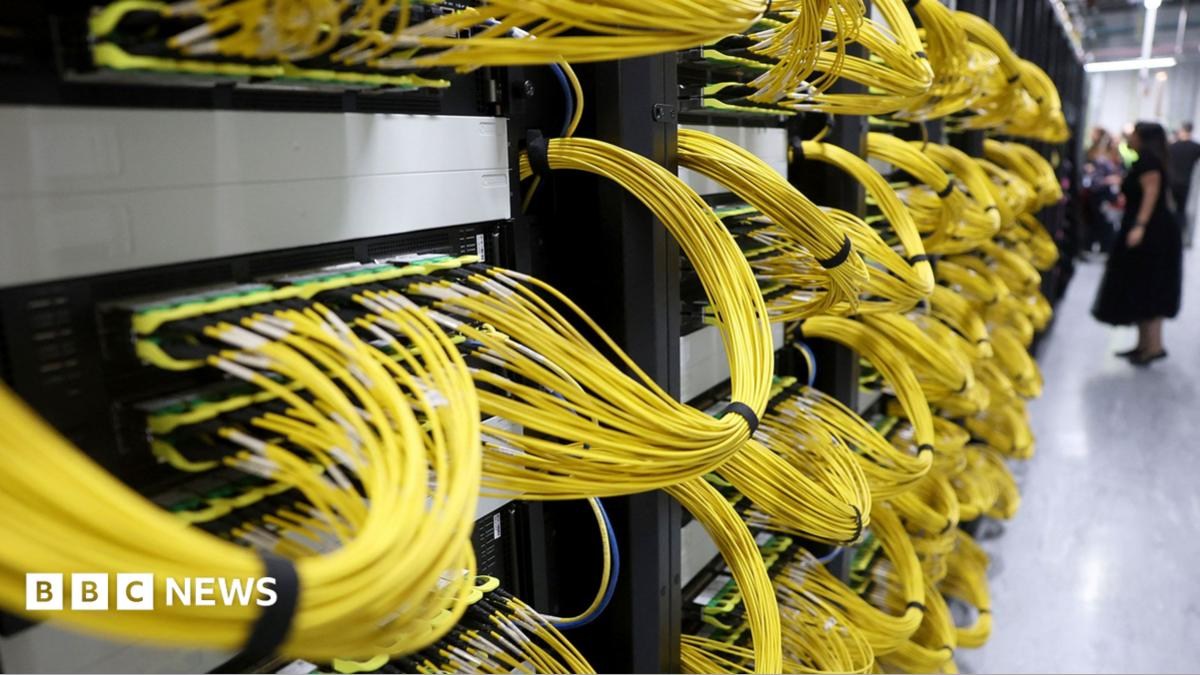
Lead: Behind the rapid rise of artificial intelligence lies a shadowy network of data centre firms—many of which are unknown to the public—whose financial health is now under scrutiny. These companies, operating at the heart of AI infrastructure, are reportedly carrying tens of billions of pounds in debt. While AI has transformed industries from healthcare to finance, the underlying financial structures supporting it are increasingly seen as fragile, raising alarms about a potential bubble that could burst.
The core of AI operations relies on vast computing power, which is delivered through data centres. These facilities house servers that process massive volumes of data, enabling machine learning models to train and evolve. As demand for AI-driven services grows, so does the need for more data centres. However, the financial mechanisms behind these facilities—particularly their debt levels—are now being scrutinized by analysts and regulators.
The Scale of Debt in Data Centres
According to a report by BBC News, the total debt held by data centres across the UK and Europe is measured in the tens of billions of pounds. This figure does not include smaller, regional facilities or those operating in emerging markets. The debt is primarily accumulated through long-term financing arrangements, including loans and bonds, used to fund construction, energy infrastructure, and ongoing operational costs.
These financial obligations are often structured with long maturities—some extending over 20 years—making them vulnerable to shifts in interest rates or economic downturns. When global interest rates rise, the cost of servicing such debt increases significantly. In a high-interest environment, even profitable data centres may face financial strain, especially if revenue growth fails to keep pace with debt obligations.
While individual data centres may operate at a profit, the aggregated financial exposure of the sector is substantial. The BBC report does not specify which firms hold the largest portions of this debt, nor does it provide a breakdown by country or region. However, the sheer scale suggests that the sector is operating at a level of financial leverage that could be destabilizing under adverse conditions.
Why These Firms Are Unseen
Most data centre operators are not publicly traded or widely reported. Unlike tech giants such as Google or Microsoft, which have large, visible footprints in the public domain, many of these firms operate as private entities or subsidiaries within larger corporations. They are often located in industrial zones, near cities, or in underdeveloped regions where visibility is low.
These firms are typically not subject to the same level of financial disclosure or regulatory scrutiny as public companies. As a result, their balance sheets, debt levels, and operational performance remain largely opaque. This lack of transparency makes it difficult for investors, regulators, and even financial analysts to assess the true health of the sector.
The absence of public reporting also means that market signals—such as rising borrowing costs or declining revenues—are not immediately visible. Without real-time data, the AI infrastructure ecosystem can appear stable when, in reality, it may be under significant financial stress.
Financial Risks and Market Sensitivity
AI applications are still in a phase of rapid expansion. While demand is growing, the market remains volatile. Sectors such as autonomous vehicles, personalized medicine, and financial modeling are still early in their development cycles. This means that revenue streams from AI services are not yet predictable or consistent.
When AI models are trained, they require massive computational resources. The cost of training a single large model can exceed $100,000, and some models require hundreds of thousands of hours of processing. This places enormous pressure on data centres to deliver consistent performance at scale. If demand fluctuates—due to economic downturns, regulatory changes, or shifts in consumer behavior—the financial viability of these facilities could quickly deteriorate.
Moreover, energy consumption is a major concern. Data centres are among the most energy-intensive facilities in the world. A single large data centre can consume as much electricity as a small city. This raises concerns about both environmental sustainability and operational costs. As energy prices rise or carbon taxes increase, the cost of running these facilities could surge, further straining their financial models.
Regulatory Gaps and Oversight Challenges
There is currently no dedicated regulatory framework for data centre debt or AI infrastructure financing. Financial regulators, such as the UK’s Financial Conduct Authority (FCA) or the European Securities and Markets Authority (ESMA), have not established specific guidelines for monitoring the debt levels of data centres.
While the FCA oversees financial stability and market integrity, it has not issued targeted regulations for the data centre sector. This absence of oversight creates a vacuum where financial risks can accumulate without intervention. In contrast, sectors like banking or real estate have well-established disclosure and risk management protocols that help prevent systemic failures.
Experts warn that without regulatory attention, the sector could become a hidden source of financial instability. If a major data centre fails due to debt or operational issues, it could trigger a ripple effect across AI services, affecting everything from cloud computing to AI-powered decision systems.
Analyst Perspectives on the AI Bubble
Several financial analysts have expressed concern about the potential for an AI bubble. A bubble occurs when asset prices rise rapidly due to speculation rather than underlying value. In the case of AI, the surge in investment has been driven by optimism about future applications, not yet proven revenue models.
One analyst noted that while AI has demonstrated real-world value in specific domains—such as fraud detection or medical diagnostics—the broader market remains speculative. The financial instruments tied to AI, including data centre debt and AI-as-a-service contracts, are often based on projected future performance rather than current earnings.
These projections are inherently uncertain. For instance, a model trained in 2024 may not perform well in 2026 due to changes in data quality, algorithmic performance, or user adoption. Without clear metrics for success, the financial models underpinning AI infrastructure remain speculative.
Implications for the Global Economy
If the AI infrastructure sector were to face a downturn, the consequences could be wide-reaching. AI is already embedded in supply chain management, logistics, financial trading, and even government services. A collapse in data centre operations could disrupt these systems, leading to inefficiencies, higher costs, and reduced innovation.
For example, in the financial sector, AI-driven trading algorithms rely on real-time data processing. A failure in data centre services could lead to market volatility or even systemic risk. Similarly, in healthcare, AI models used for diagnostics depend on stable, high-performance computing. A disruption could delay critical medical decisions.
Moreover, the global economy is increasingly dependent on AI-driven automation. As more industries adopt AI tools, the stability of the underlying infrastructure becomes a key determinant of economic resilience. A failure in this infrastructure could undermine confidence in digital technologies across sectors.
What Comes Next?
At present, there is no official warning or regulatory action targeting data centre debt or AI financial structures. The BBC report does not indicate any immediate crisis, nor does it cite specific failures or bankruptcies. However, the growing debt levels and lack of transparency suggest that the sector is operating in a high-risk environment.
Experts recommend that regulators begin to monitor data centre financial health more closely. This could include requiring disclosures on debt levels, energy consumption, and revenue projections. Additionally, financial institutions should conduct stress tests on AI-related investments to assess their resilience under adverse conditions.
While the AI bubble may not yet have burst, the signs of financial fragility are becoming more apparent. The sector’s rapid expansion has outpaced the development of financial safeguards. Without intervention, the risk of a systemic failure—triggered by debt defaults or operational collapses—remains a real possibility.
As AI continues to evolve, the infrastructure that powers it will remain a critical component of the global economy. Ensuring that this infrastructure is both scalable and financially sustainable will be essential. The firms behind the scenes—those with little public visibility—may be the most vulnerable, and their stability could ultimately determine the future of artificial intelligence as a global force.