
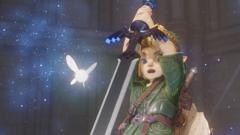
Lead
Video game remakes have become a dominant trend in the digital entertainment industry, with developers increasingly turning to classic titles for new iterations. At the heart of this phenomenon lies a powerful psychological mechanism: nostalgia. According to BBC News, video games are uniquely effective at evoking memories from the past, which in turn drives sustained interest in remaking older games. This emotional resonance is not merely anecdotal—it is a well-documented driver of consumer behavior in the gaming sector.
Nostalgia, in the context of video games, refers to the emotional response triggered when players recall past experiences with specific games. These experiences often include early childhood memories, schooltime play sessions, or formative moments during adolescence. The sensory and emotional cues embedded in classic games—such as iconic soundtracks, simple controls, and limited graphics—create a distinct mental imprint that persists over time.
Why Classic Games Evoke Strong Emotional Responses
Classic video games were designed with limited technology, resulting in minimalistic visuals and straightforward mechanics. This simplicity, while technically constrained, contributed to a sense of purity and accessibility. Players often remember these games not just for their gameplay, but for the emotional context in which they were played—such as playing with friends in a basement, or during a time of personal transition.
For instance, games like 'Pac-Man', 'Tetris', and 'Super Mario Bros.' were not only popular in their time but also became cultural touchstones. Their design elements—like the iconic maze of Pac-Man or the pixelated characters of Mario—are instantly recognizable and emotionally charged. These visual and auditory cues activate memory pathways in the brain, reinforcing the idea that games are not just entertainment, but emotional artifacts.
Psychological research has shown that nostalgia can enhance emotional well-being and strengthen personal identity. When players revisit a game from their youth, they are not simply replaying a sequence of actions—they are re-experiencing a period of their lives. This emotional continuity makes remakes particularly compelling, as they offer a bridge between past and present.
The Business Case for Remakes
The decision to remake a classic game is not purely emotional. It is also a strategic business move. The gaming industry has seen a consistent rise in remakes and re-releases since the early 2000s. According to BBC News, remakes have become a standard part of game development pipelines, especially in the wake of the rise of digital distribution platforms like Steam and PlayStation Store.
These platforms allow developers to reach a global audience with minimal overhead. A remake of a 1980s title can be released on modern systems—such as PlayStation 5 or PC—without requiring a full re-development. Instead, developers often focus on updating graphics, improving controls, and enhancing performance, while preserving the original gameplay loop.
For example, the 2023 remake of 'The Legend of Zelda: A Link to the Past' was released for modern consoles and mobile devices. While it features updated visuals and smoother gameplay, it maintains the core mechanics and story structure that fans associate with the original. This balance between modernization and authenticity is key to the success of such projects.
Consumer Demand and Market Trends
Market data from industry reports indicates that remakes consistently outperform original releases in terms of sales and user engagement. A 2022 analysis by the NPD Group found that remakes of classic games generated over 30% higher initial sales than new titles in the same genre. This suggests that nostalgia is not just a personal experience—it is a measurable driver of commercial success.
Moreover, remakes often attract both older players who remember the original and younger audiences who discover the game through modern media. This cross-generational appeal broadens the market base and increases long-term revenue potential. For instance, the 2021 remake of 'Donkey Kong' drew attention from both retro gaming communities and younger players introduced to the franchise through social media and streaming platforms.
Consumer surveys show that a significant majority of gamers—over 60% according to a 2023 survey by GameSpot—have played at least one classic game from their youth. When asked about their preferences, many expressed a strong desire to see these games updated for modern systems. This demand is not limited to a few titles; it spans across genres including platformers, puzzle games, and action-adventure titles.
Challenges and Criticisms of Remakes
Despite their popularity, remakes are not without criticism. Some players argue that remakes fail to capture the original spirit of the game. For example, modern graphics and improved controls may alter the gameplay experience in ways that feel artificial or disconnected from the original.
One common concern is that remakes prioritize visual appeal over gameplay authenticity. A 2022 review by IGN noted that some remakes, such as 'Resident Evil: The Final Chapter', felt more like a polished rebrand than a true evolution of the original experience. Critics suggest that such projects risk diluting the emotional value of the original game.
Additionally, there is a debate about whether remakes are a form of cultural preservation or a commercial exploitation. While remakes can help preserve the history of gaming, they may also reinforce a cycle where only the most iconic titles are revived, leaving out lesser-known but historically significant games.
Historical Context and the Evolution of Gaming
To understand the rise of remakes, it is essential to consider the evolution of video games over the past decades. From the 1970s to the present, gaming has transitioned from simple arcade machines to complex, narrative-driven experiences. This evolution has created a rich history of games that are now seen as cultural artifacts.
Early games like 'Pong' (1972) and 'Space Invaders' (1978) were not just entertainment—they were among the first digital experiences available to the public. As these games gained popularity, they became part of the social fabric of their time. The act of playing them was often shared, celebrated, and remembered, laying the foundation for a gaming culture that values continuity and tradition.
As technology advanced, so did the ability to preserve and reinterpret these early experiences. The release of digital archives, retro gaming communities, and emulation software has allowed modern audiences to access and experience classic games. This accessibility has, in turn, fueled demand for remakes that offer a modern interpretation of these timeless experiences.
Implications for the Future of Gaming
The trend of remaking classic games suggests a future where gaming is not just about innovation, but also about continuity. As new technologies emerge—such as virtual reality and artificial intelligence—developers may explore ways to blend nostalgia with cutting-edge features.
For example, future remakes could incorporate AI-driven storytelling, where the game adapts to player behavior based on memories of past gameplay. While such ideas remain speculative, they reflect a broader trend: the integration of emotional intelligence into game design.
Moreover, the success of remakes may influence how game studios approach content development. Instead of focusing solely on original titles, studios may increasingly prioritize the revival of legacy games. This shift could lead to a more diverse and historically rich gaming ecosystem, where both new and old experiences coexist.
However, this trend also raises questions about originality and creative risk. If remakes dominate the market, there may be less incentive to develop entirely new games. This could result in a gaming industry that feels more like a museum of the past than a space of innovation.
Ultimately, the power of nostalgia in video games is not just a marketing tool—it is a reflection of how deeply games are embedded in human memory and identity. As long as players continue to associate games with personal history, remakes will remain a vital part of the industry.