
Lead
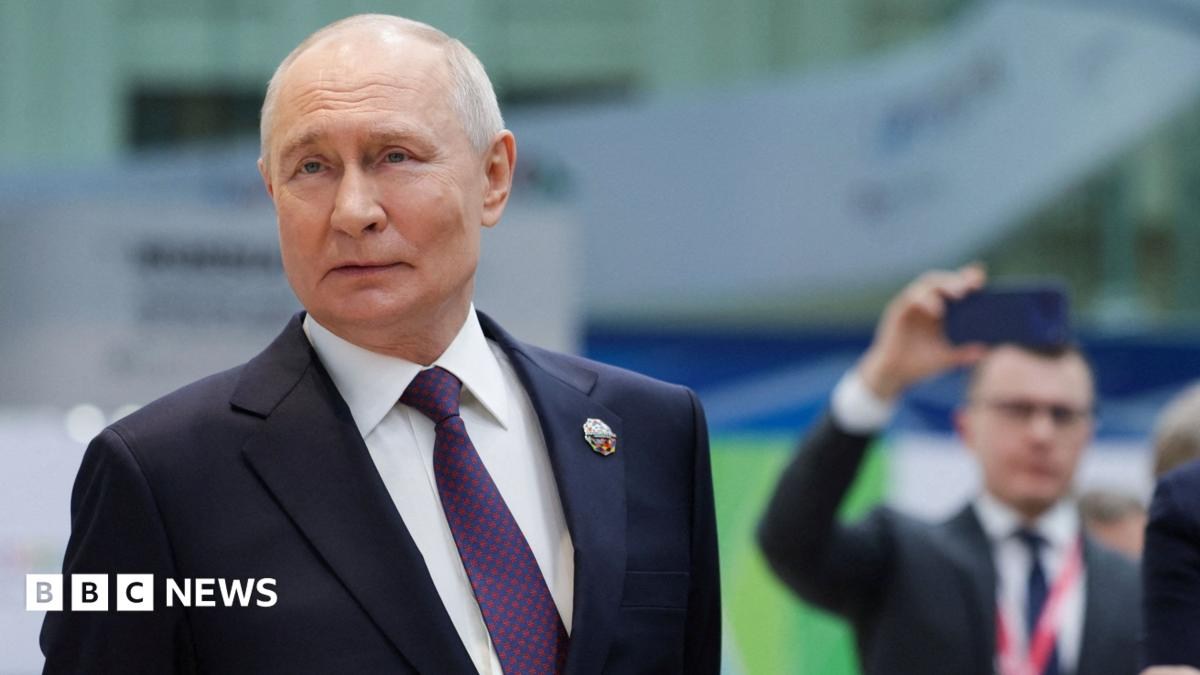
During a recent high-level discussion involving satellite technology, Russian President Vladimir Putin publicly acknowledged Elon Musk as a 'real genius,' marking a rare public endorsement of the SpaceX CEO. The statement was made in the context of a bilateral exchange on space-based communication systems, with Putin asserting that the two leaders are in 'close' contact. This public affirmation, reported by BBC News, reflects a growing visibility of cross-border engagement in space technology, even amid geopolitical tensions.
Background: The Context of Satellite Communication in Global Politics
Space-based communication systems have long been considered critical infrastructure for national security, emergency response, and international diplomacy. Countries with advanced space programs, such as Russia and the United States, have invested heavily in satellite networks to maintain secure and uninterrupted communication channels. These systems are especially vital during times of crisis or conflict, where traditional communication infrastructure may be compromised.
For Russia, satellite technology has been a cornerstone of its strategic capabilities since the Cold War era. The country operates a vast constellation of military and civilian satellites, including those used for navigation, surveillance, and global communications. The Russian space program, managed by Roscosmos, has maintained a strong presence in international space initiatives, despite recent geopolitical challenges.
Meanwhile, SpaceX, under Elon Musk’s leadership, has rapidly expanded its capabilities in satellite communications through projects like Starlink. Launched in 2019, Starlink aims to provide global broadband internet coverage using a network of low Earth orbit satellites. As of 2024, the constellation includes over 5,000 satellites, with plans to expand further. This technological advancement has positioned SpaceX as a key player in the global digital infrastructure landscape.
Putin’s Public Endorsement of Musk: What It Signifies
Putin’s description of Musk as a 'real genius' is notable because it is a rare public statement from a world leader praising a private-sector figure. While previous leaders have acknowledged the importance of technology, few have directly lauded individuals from the private sector in such a manner.
The statement emerged during a discussion on satellite operations, suggesting that both Russia and SpaceX have engaged in technical or strategic dialogue. The phrase 'close contact' implies a level of ongoing interaction, though the nature of this communication—whether formal, informal, or technical—has not been specified in available reports.
Such public recognition may signal a broader trend of cross-sector collaboration between state actors and private technology companies. In recent years, governments have increasingly partnered with private firms to accelerate innovation in areas such as artificial intelligence, cybersecurity, and space exploration. The Russian acknowledgment of Musk could reflect a strategic effort to maintain technological parity or foster cooperation in space-based infrastructure.
Historical Precedents of State-Private Sector Engagement in Space
Historically, space exploration has been a domain dominated by state-led programs. The United States, the Soviet Union, and China have all maintained national space agencies that oversee major missions. However, the rise of private companies like SpaceX, Blue Origin, and Rocket Lab has shifted the balance of power in the sector.
Notable examples include NASA’s partnerships with private companies for satellite launches and space station operations. In 2020, NASA awarded contracts to SpaceX for the development of the Starlink system, which supports both commercial and government communication needs. Similarly, the U.S. Department of Defense has collaborated with private firms to enhance satellite-based surveillance and data transmission.
While Russia has traditionally maintained a more state-centric approach to space, recent developments suggest a willingness to engage with private actors. In 2023, Russia began exploring partnerships with private space ventures, particularly in the area of satellite data processing and commercial applications. These efforts may be part of a broader strategy to modernize its space capabilities in response to global technological shifts.
Geopolitical Implications of the Musk-Putin Exchange
The public exchange between Putin and Musk, while not detailed in official records, may carry subtle geopolitical implications. As space becomes increasingly central to global power dynamics, the ability to control and operate satellite networks is seen as a strategic asset.
Space-based communication systems are not only about connectivity—they also serve as tools for intelligence gathering, early warning systems, and military coordination. The fact that Putin has acknowledged Musk’s technical expertise suggests a recognition of the growing influence of private technology firms in shaping global infrastructure.
Moreover, the dialogue may reflect a broader effort by Russia to maintain access to advanced technologies, even as it faces international sanctions and technological isolation. By publicly endorsing a figure like Musk, Putin may be signaling openness to collaboration, or at least a willingness to engage with global technological leaders despite political differences.
Limitations of Available Information
Despite the BBC report, the details of the conversation between Putin and Musk remain limited. There is no publicly available record of the actual discussion, no official transcript, and no confirmation of the specific topics covered. The BBC article does not specify whether the dialogue occurred during a formal meeting, a video call, or a technical briefing.
Additionally, there is no evidence of any joint projects, shared data, or coordinated satellite operations between Russia and SpaceX. The claim of 'close contact' does not imply a formal partnership or shared objectives. The nature of the interaction—whether it was a one-off exchange or part of a longer-term strategy—remains unclear.
As such, while the public praise is significant, it must be interpreted with caution. The statement may be a diplomatic gesture, a reflection of mutual respect for technological achievement, or a symbolic acknowledgment of the role of private innovation in modern society.
Public Perception and Media Coverage
The statement has drawn significant attention in both international and domestic media. On social media platforms, the quote has been widely shared, with users interpreting it as a sign of improved relations between Russia and the United States, or as a reflection of Musk’s global influence.
However, media coverage has not provided any evidence of actual collaboration between Russian and SpaceX systems. Starlink satellites are operated by SpaceX and are not integrated with Russian satellite networks. There is no known technical or operational link between the two systems.
Public perception may be shaped by the symbolic value of the statement rather than its factual content. Musk, as a prominent figure in technology and space, has long been a subject of public fascination. His interactions with world leaders, especially in high-profile settings, often generate media attention, even when the substance of the conversation is not fully disclosed.
Future Outlook: Space as a Domain of Strategic Competition
Looking ahead, space is expected to remain a key domain of strategic competition among global powers. The United States, China, and Russia are all investing in next-generation satellite systems, with a focus on resilience, autonomy, and data processing capabilities.
Private companies like SpaceX are likely to play an increasingly important role in this landscape. Their ability to rapidly deploy and scale satellite networks offers a competitive advantage over traditional state-led programs. As such, the relationship between state actors and private firms will likely become more complex and nuanced.
While the current exchange between Putin and Musk does not indicate a formal alliance or shared mission, it underscores the growing importance of private technological leadership in shaping global infrastructure. Future interactions may reveal deeper layers of cooperation, especially as space-based systems become more integrated into national and international operations.
Conclusion: A Statement of Respect, Not of Partnership
Putin’s public praise of Elon Musk as a 'real genius' is a significant moment in the public discourse on technology and leadership. It reflects a recognition of Musk’s influence and technical achievements, particularly in the field of space innovation.
However, the statement must be understood within its context. It does not indicate a formal partnership, shared satellite operations, or a strategic alignment between Russia and SpaceX. The claim of 'close contact' remains vague and lacks supporting evidence.
As space continues to evolve as a domain of both opportunity and competition, such public acknowledgments may serve as symbolic gestures rather than indicators of tangible collaboration. The true impact of these interactions will likely be measured not in public statements, but in the development of actual technologies, infrastructure, and international cooperation in the years to come.