
Lead
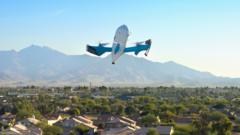
As drone deliveries become a regular part of daily life, a quieting revolution is underway in the world of unmanned aerial vehicles. What was once a futuristic concept is now a reality in cities and rural areas alike—delivering medicine, groceries, and small packages directly to homes. Yet, with this growing presence comes a persistent issue: the loud, high-pitched buzzing of most drones. In response, manufacturers are actively researching and developing quieter technologies to make these devices less intrusive and more acceptable in shared urban spaces.
Drone deliveries have seen a surge in adoption over the past decade. Companies like Amazon, Zipline, and Wing have tested and deployed delivery systems in various regions, from rural farms to urban centers. These systems promise faster, more efficient logistics, especially in hard-to-reach areas or during emergencies. However, the sound emitted by most drones—often described as a sharp, repetitive buzz—has become a source of public annoyance. Residents report hearing the noise during early morning hours or late evenings, times when quiet is expected.
Why Noise Matters in Urban Environments
Urban areas are particularly sensitive to noise pollution. According to the World Health Organization, prolonged exposure to high decibel levels can lead to sleep disturbances, stress, and even cardiovascular issues. In densely populated cities, the addition of new noise sources—such as drones—raises concerns about public health and quality of life.
Drone operations often occur in residential neighborhoods, parks, and near schools. The sound of a drone, especially when it is flying at low altitudes or in close proximity to people, can be jarring. A 2022 study by the University of California, Berkeley, found that 73% of participants in a survey reported being disturbed by drone noise, with many describing it as 'annoying' or 'unpleasant.' The study also noted that children and elderly individuals were more sensitive to such sounds.
Moreover, the perception of drones as 'unfriendly' or 'invasive' is growing. A 2023 report by the International Federation of Robotics highlighted that public trust in drone technology is closely tied to its noise profile. When people associate drones with loud, mechanical sounds, they are less likely to accept them in their communities, regardless of the benefits they offer.
The Technical Challenge of Quieter Drones
Reducing drone noise is not a simple engineering task. Most drones rely on electric motors that generate significant sound during operation. These motors operate at high speeds to maintain flight stability and maneuverability, which inherently produces a buzzing or whirring noise. The challenge lies in balancing performance with acoustics—achieving efficient flight without sacrificing sound levels.
One approach being explored is the use of advanced motor designs. Engineers are experimenting with quieter motor types, such as brushless motors with optimized blade shapes and materials. These motors produce less vibration and turbulence, which directly reduces noise output. For instance, a prototype developed by a German aerospace firm in 2023 demonstrated a 30% reduction in sound intensity compared to conventional models.
Another innovation involves the use of acoustic dampening materials. These materials, often made from lightweight composites or specialized foams, are integrated into the drone's frame or propeller assembly. They absorb vibrations and redirect sound waves away from the user. While still in early testing phases, such materials show promise in reducing the overall noise footprint of drones.
Propeller design is also a key factor. Traditional propellers are typically made of plastic or carbon fiber and spin at high speeds. Research from the Massachusetts Institute of Technology (MIT) has shown that altering the shape, angle, and number of blades can significantly reduce noise. For example, a four-blade propeller with a curved profile can produce up to 50% less noise than a standard three-blade design, without compromising lift or stability.
Regulatory and Public Response
As drone noise becomes a public concern, regulatory bodies are beginning to address it. In the United States, the Federal Aviation Administration (FAA) has included noise considerations in its drone safety guidelines. While it does not yet have specific regulations targeting drone sound levels, it has emphasized the need for manufacturers to consider environmental impact during design and testing phases.
Similarly, the European Union has introduced noise-related criteria in its drone certification standards. These standards require that all commercial drones meet certain decibel thresholds, especially when operating in residential zones. The European Union Aviation Safety Agency (EASA) has stated that 'noise is a key factor in determining public acceptance' and that future regulations may include mandatory noise testing for all delivery drones.
Public feedback is also shaping the direction of innovation. In 2024, a consumer survey conducted by a UK-based technology think tank found that 68% of respondents would be more willing to accept drone deliveries if the devices were significantly quieter. The survey also revealed that users were more likely to support drone use in areas where noise was already managed through zoning laws or green spaces.
Case Studies in Quiet Drone Development
Several companies are leading the charge in developing quieter drones. One such example is a startup in Singapore that has developed a delivery drone capable of operating at under 50 decibels—comparable to the sound of a quiet conversation. The drone uses a combination of low-speed motors, acoustic shielding, and a unique blade configuration to achieve this. It has been tested in urban neighborhoods and has received positive feedback from residents.
Another example comes from a collaboration between a Canadian university and a local drone manufacturer. Their joint project focused on using AI-driven flight paths to minimize noise exposure. By analyzing wind patterns and local noise sensitivity, the system can adjust flight altitude and speed to avoid residential zones during peak noise hours. While still in pilot phase, the project has shown a 40% reduction in noise impact in test areas.
These case studies illustrate that progress in quiet drone technology is not only possible but already being realized. However, scalability remains a challenge. Most of these innovations are still in testing or early deployment stages and have not yet been widely adopted in commercial operations.
Implications for Future Drone Integration
If quieter drones become the standard, it could significantly accelerate the acceptance of drone delivery systems in everyday life. Public support is a critical factor in the expansion of drone-based logistics. A quieter drone may not only reduce complaints but also open the door to broader applications—such as emergency medical deliveries, rural supply chains, and even personal use cases like package delivery to homes.
Moreover, quieter drones could reduce the environmental footprint of urban transport. Noise pollution is a form of environmental degradation, and reducing it aligns with broader sustainability goals. As cities strive to become more livable and eco-friendly, quieter drones may become a key component of smart urban infrastructure.
However, challenges remain. The cost of developing and implementing quieter technologies is high. Advanced materials and motor systems are more expensive than conventional components. This may limit adoption in price-sensitive markets or developing regions. Additionally, regulatory frameworks are still evolving, and there is no global standard for drone noise levels.
What Lies Ahead?
The future of drone technology may well be defined not just by speed or range, but by silence. As drone deliveries grow in frequency, the demand for quieter, more discreet models will only increase. Industry leaders are investing in research to meet this demand, and public interest in noise reduction is growing.
Looking ahead, it is likely that quieter drones will become a standard feature in commercial and consumer models. As technology advances, we may see drones that operate at near-silent levels—capable of flying through residential areas without disturbing residents. This shift could redefine how drones interact with human environments, moving from being seen as mechanical intruders to trusted, integrated tools.
Still, the journey toward silent drones is not without hurdles. Technical limitations, economic costs, and regulatory gaps must be addressed. Until then, the search for stealthier drones remains an active and vital pursuit—one that reflects both technological progress and the growing need for harmony between innovation and community life.