
Lead
Supercomputers are among the most powerful computing systems ever built. They are not designed for everyday tasks like browsing the web or running office applications. Instead, they are engineered to perform complex calculations at speeds far beyond ordinary computers. Their primary function is to solve massive, real-time problems in science, engineering, and national security. This article explores what a supercomputer is for, how it operates, and who has access to these extraordinary machines.
What Is a Supercomputer?
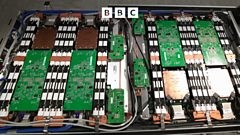
A supercomputer is a computer system that can perform trillions of calculations per second. It is defined by its ability to execute high-performance computing tasks, typically measured in petaflops (quadrillions of operations per second) or higher. These systems are not consumer devices. They are massive installations, often occupying entire rooms, with thousands of interconnected processors working in parallel.
The term 'supercomputer' emerged in the 1960s, when early systems were developed to support scientific research. Since then, the technology has evolved significantly. Modern supercomputers are used in fields ranging from climate modeling to nuclear physics. They are not just tools for scientists — they are critical infrastructure for modern society.
How Do Supercomputers Work?
At the core of a supercomputer is a network of thousands of processing units, known as processors. These processors work simultaneously, dividing a single complex problem into smaller parts and solving them in parallel. This parallel processing allows supercomputers to handle tasks that would take ordinary computers years to complete.
Each processor operates at high clock speeds, often in the range of several gigahertz. However, raw speed alone is not enough. The efficiency of a supercomputer depends on how well its processors are coordinated through a high-speed interconnect network. This network ensures that data is shared quickly between processors, minimizing delays and maximizing performance.
Supercomputers also rely on specialized software to manage the distribution of tasks. This software, known as a parallel computing framework, breaks down large problems into smaller sub-tasks and assigns them to available processors. The results are then combined to produce a final output. This process is known as 'parallel computing' and is fundamental to the operation of supercomputers.
Energy consumption is a major factor in supercomputer design. These systems require significant power — often in the range of hundreds of kilowatts. Cooling systems are essential, as the heat generated by thousands of processors can reach dangerous levels. Supercomputers are typically housed in climate-controlled environments with advanced ventilation and liquid cooling systems.
Key Applications of Supercomputers
Supercomputers serve a wide range of applications across multiple domains. In climate science, they simulate weather patterns and long-term climate change, helping governments and organizations prepare for extreme weather events. These simulations require modeling atmospheric conditions over vast geographic areas and time spans.
In the field of medicine, supercomputers are used to analyze medical data, including genetic sequences and imaging results. This enables researchers to identify disease patterns and develop personalized treatments. For example, they can simulate how drugs interact with human cells at a molecular level.
Another major application is in nuclear physics. Supercomputers are used to model the behavior of atomic nuclei, which is essential for both energy research and national security. These simulations help scientists understand nuclear reactions and improve reactor designs.
Supercomputers are also used in aerospace engineering to simulate flight conditions and material stress. This allows engineers to test designs without physical prototypes, reducing costs and time. In defense, they support missile trajectory calculations and threat modeling.
Who Gets to Use a Supercomputer?
Access to supercomputers is not universal. While many are operated by national research institutions, only a select group of organizations and individuals can use them. These include universities, government agencies, and research laboratories.
For example, the United States has the National Center for Supercomputing Applications (NCSA) and the Department of Energy’s Office of Science, which operate large-scale systems. In Europe, the European Centre for Medium-Range Weather Forecasts (ECMWF) uses supercomputers for global weather modeling. In Asia, Japan’s RIKEN and China’s National Supercomputer Center operate high-performance systems.
Access is typically granted through competitive proposals. Researchers must submit detailed project plans to demonstrate the scientific value of their work. These proposals are reviewed by panels of experts, and only a limited number of projects are approved each year.
There is no public access to supercomputers. The systems are protected by strict security protocols and are often used for sensitive applications, such as defense or intelligence. As a result, the public does not have direct access to these machines, even if they are located in publicly accessible facilities.
Global Distribution and Leadership
Supercomputers are not evenly distributed across the world. The United States, China, and Europe lead in supercomputing capacity. According to the TOP500 list, which ranks the world’s most powerful supercomputers, the U.S. has historically held the top positions. However, China has rapidly advanced in recent years, with systems like the Sunway TaihuLight and the Tianhe-2 achieving high rankings.
China’s progress in supercomputing has been driven by both government investment and domestic research initiatives. The country has built several national supercomputing centers, including the National Supercomputer Center in Shenzhen and the one in Tianjin. These centers support a wide range of scientific and industrial applications.
Europe maintains a strong presence through shared infrastructure. The European Union has established the European Supercomputing Centre (ESC) in Hamburg, which supports research across member states. This center provides access to supercomputers for academic and industrial users.
Other countries, such as India and South Korea, have developed their own supercomputing capabilities. India’s Supercomputing Centre in Pune and South Korea’s KISTI have systems that rank among the world’s top performers, though still behind the leading nations in raw computing power.
Challenges and Limitations
Despite their power, supercomputers face significant challenges. One major limitation is cost. Building and maintaining a supercomputer can cost hundreds of millions of dollars. These systems require specialized hardware, advanced cooling, and highly skilled personnel to operate.
Another issue is energy consumption. Supercomputers use vast amounts of electricity, which raises environmental concerns. For instance, the Sunway TaihuLight consumed over 13 megawatts of power during operation — equivalent to the energy needs of a small town.
There is also a risk of over-reliance on supercomputers. While they can solve complex problems, they are not infallible. Errors in data input or software can lead to incorrect results. Additionally, the results of simulations are only as good as the models used to generate them.
Future of Supercomputing
The future of supercomputing is closely tied to advancements in computing hardware and software. Emerging technologies such as quantum computing and neuromorphic chips may eventually complement or even surpass traditional supercomputers in specific applications.
Quantum computers, for instance, operate on principles of quantum mechanics and can perform certain types of calculations exponentially faster than classical computers. While still in early development, quantum computing has the potential to revolutionize fields like cryptography and materials science.
Meanwhile, artificial intelligence is increasingly being integrated into supercomputing environments. AI algorithms can help optimize how tasks are distributed across processors, improving efficiency. This synergy between AI and high-performance computing is already being tested in weather forecasting and drug discovery.
Looking ahead, supercomputers will likely remain essential tools for scientific discovery. As global challenges such as climate change, pandemics, and energy security grow in complexity, the demand for high-performance computing will only increase.
However, equitable access to these systems remains a challenge. Developing nations often lack the infrastructure and funding to build or maintain supercomputers. This raises concerns about a digital divide in scientific research, where only a few countries can contribute to global knowledge.
As a result, international cooperation is becoming more important. Initiatives such as the Global Earth Observation System and the Open Science Framework aim to share data and computing resources across borders. These efforts could help democratize access to supercomputing capabilities.