
Lead
A popular waterfowl park in County Down, Northern Ireland, has been forced to close after an incident involving the vandalism of an oil tank, resulting in oil contamination of its central pond. The park, a well-known destination for nature lovers and local residents, is now operating under emergency conditions as officials work to remove the oil and assess environmental damage. The incident has triggered a public and environmental response, with concerns raised about the impact on wildlife and visitor safety.
The park, which features a large pond attracting ducks, geese, and other waterfowl, has been closed to the public since the incident was reported. According to a report by BBC News, the contamination occurred after an unknown individual vandalized an oil tank located near the park's perimeter. The tank, which was reportedly used for maintenance or storage purposes, was found to have been breached, allowing oil to spill into the adjacent pond.
Timeline of the Incident
The incident was first reported on Tuesday, May 21, 2024, when local residents noticed a dark, oily substance spreading across the pond. Witnesses described seeing a visible sheen on the water surface and a strong, unpleasant odor emanating from the area. Park staff attempted to contain the spill by restricting access to the pond and initiating a preliminary assessment of the oil's volume and composition.
By Wednesday, May 22, local authorities confirmed the breach of the oil tank and launched a formal investigation. The Northern Ireland Environment Agency (NIEA) was notified and dispatched a team to assess the environmental impact. The agency reported that the oil had likely originated from a small storage unit used for routine maintenance of park infrastructure.
On Thursday, May 23, a joint operation involving the NIEA, the local police, and environmental specialists began to remove the oil from the pond. The process involved using specialized booms and skimmers to contain and extract the substance. Officials stated that the operation was ongoing and that full cleanup would take several days, depending on the volume of oil and weather conditions.
Environmental and Wildlife Impact
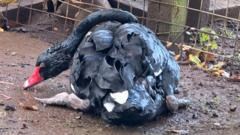
The pond is a critical habitat for migratory and resident waterfowl species, including mallards, coots, and greylag geese. The presence of oil poses a direct threat to these birds, as it can coat their feathers, impairing their ability to insulate and fly. The BBC News report notes that birds in the area have shown signs of distress, with some exhibiting abnormal behavior such as reduced movement or difficulty swimming.
Environmental experts have emphasized that even small amounts of oil can have long-term effects on aquatic ecosystems. Dr. Eileen O’Donnell, a wildlife ecologist at the University of Ulster, stated that 'oil contamination can disrupt food chains, reduce breeding success, and lead to increased mortality rates among waterfowl populations.' She added that the current situation at the park represents a 'critical moment' for both conservation and public awareness.
The NIEA has confirmed that water samples have been collected and are being analyzed for toxicity. Preliminary findings suggest the oil is a mixture of diesel and lubricant, both of which are known to be harmful to aquatic life. The agency has not yet released a full assessment, but it has indicated that the contamination may require long-term monitoring to ensure the ecosystem recovers fully.
Public and Community Response
The closure of the park has sparked concern among local residents and visitors. Social media platforms have seen a surge in posts expressing frustration over the loss of a key recreational space. One resident, Sarah Thompson, wrote on a local Facebook group: 'We used to go here every weekend with our children. Now it’s closed and we don’t know when it will reopen. It’s a real shame.'
Community leaders have called for greater accountability and improved security around infrastructure at public parks. A petition with over 1,200 signatures has been launched, urging local authorities to install better surveillance and secure storage for hazardous materials. The petition also requests a public report on how such incidents could be prevented in the future.
Several local environmental groups have offered support, including the Northern Ireland Wildlife Trust and the Community Environmental Network. These organizations have pledged to assist in monitoring bird populations and conducting post-cleanup ecological assessments. They also plan to publish a public report detailing the incident and its implications for public park management.
Investigation and Accountability
Police have not released details about the identity of the individual responsible for the vandalism. However, a preliminary inquiry suggests that the act may have been motivated by a personal grievance or a lack of awareness of the environmental consequences. No suspects have been identified as of May 23.
Local authorities have stated that they are reviewing security protocols at the park, including access controls and the storage of non-hazardous materials. A review panel has been established to examine how such incidents could be prevented in the future. The panel will assess the physical layout of the park, maintenance procedures, and visitor access points.
While no criminal charges have been filed, the incident has raised questions about the oversight of hazardous materials in public spaces. The NIEA has issued a public advisory recommending that all public facilities with storage units for oils or chemicals conduct regular audits and implement clear signage and safety procedures.
Recovery and Future Outlook
Officials estimate that the full cleanup process will take between five and seven days, depending on weather and the volume of oil. The pond is expected to be fully decontaminated by the end of May 2024, though the park may remain closed for a period of time to ensure safety and ecological recovery.
Once the oil is removed, the park will undergo a full environmental assessment to determine whether it is safe for birds and visitors to return. The NIEA has indicated that this process may take several weeks, with a final report expected by early June.
There are currently no plans to reopen the park to the public before the end of May. The management team has stated that they will prioritize the health of the ecosystem over rapid reopening, especially given the sensitivity of the waterfowl population.
Looking ahead, the incident has prompted a broader discussion about the management of hazardous materials in public recreational spaces. Experts suggest that parks and similar facilities should adopt standardized safety protocols, including regular inspections, staff training, and public education on the risks of vandalism.
As of May 24, 2024, the park remains closed, and no further updates have been issued by the NIEA or local authorities. The situation is being monitored closely, with updates expected to be released in the coming days.
The incident serves as a stark reminder of the vulnerability of natural habitats to human actions—both intentional and accidental. While the immediate threat has been contained, the long-term ecological and social impacts of such events will require sustained attention and public engagement.