
Lead
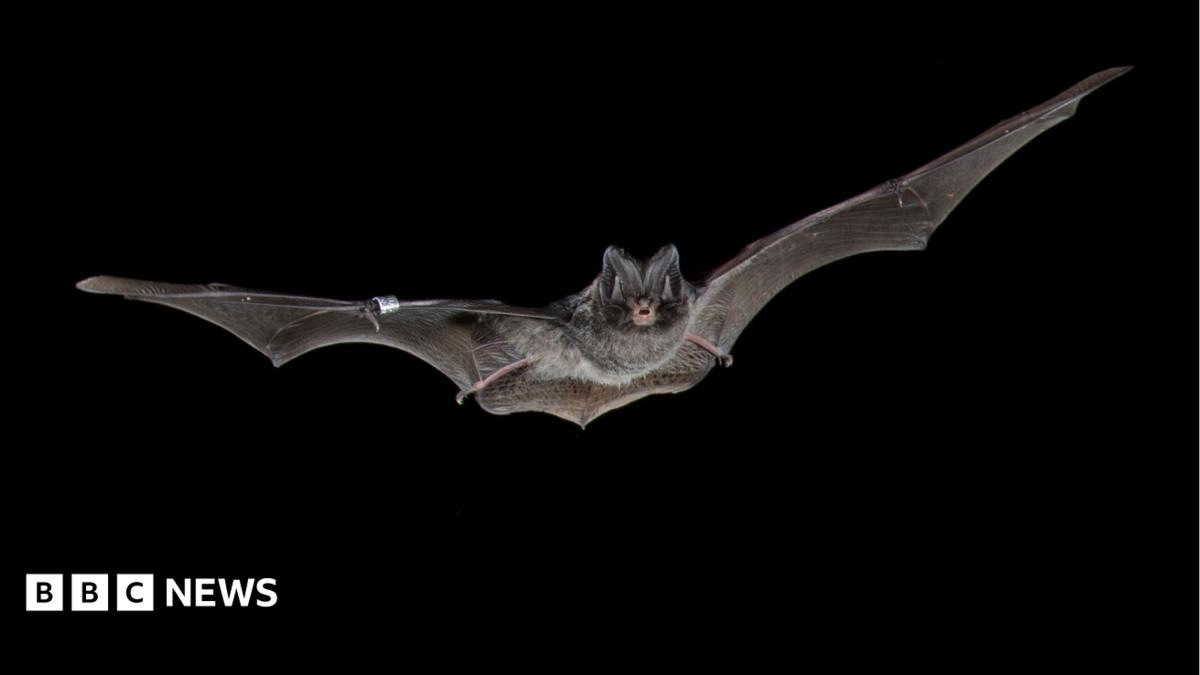
Scientists in southwest England have confirmed the presence of several of Britain's rarest and most threatened bat species in a newly completed woodland bat survey. The study, which represents the largest such survey in the country's history, has revealed that these elusive creatures are thriving in specific forested areas of Devon and Cornwall. The research, conducted by a team of conservationists and researchers, underscores the growing role of artificial intelligence in environmental monitoring and biodiversity assessment.
The survey, which spanned over 18 months and covered more than 1,200 hectares of woodland across southern England, used AI-driven software to analyze thousands of hours of recorded bat echolocation calls. These calls, naturally emitted by bats as they navigate and hunt, are typically inaudible to the human ear and require sophisticated processing to interpret. The AI system was trained to distinguish between different bat species based on the frequency, duration, and pattern of their echolocation signals.
Background: The Importance of Bat Conservation in Britain
Bats are among the most ecologically significant yet vulnerable groups of mammals in the UK. With over 18 species recorded in Britain, many of which are endemic or regionally restricted, bats face mounting threats from habitat loss, climate change, and human activity. The UK government has designated several bat species as 'nationally rare' or 'threatened,' with some listed under the UK Biodiversity Action Plan as priority species for conservation.
Historically, bat surveys have relied on manual observation and acoustic recording by trained biologists. These methods are time-intensive, require expert interpretation, and are often limited by the geographical scope of fieldwork. As urban development and land-use changes continue to fragment natural habitats, there is increasing pressure to develop scalable, cost-effective tools for monitoring bat populations.
The current survey, led by the University of Exeter in collaboration with the Bat Conservation Trust, aimed to map the distribution of bat species across the southwest of England. The region, known for its diverse and ancient woodlands, was selected for its ecological significance and the presence of several species previously thought to be declining or absent in certain areas.
Methodology: How AI Was Used to Analyze Bat Calls
The survey employed a machine learning model trained on a dataset of over 100,000 hours of bat echolocation recordings collected from previous fieldwork. The AI system was designed to detect, classify, and track individual bat species by analyzing the unique acoustic signatures of their calls. This process involved filtering out background noise, identifying call patterns, and assigning species labels based on known acoustic profiles.
Researchers used a combination of passive acoustic monitoring stations and mobile field units to collect data. These devices, placed in forested areas, continuously recorded ambient sounds and transmitted them to a central server for processing. The AI model then analyzed the data in real time, flagging potential bat activity and classifying it by species.
While the AI did not replace human experts, it significantly reduced the time required to process raw audio data. What once took weeks of manual analysis by biologists can now be completed in hours. This efficiency allows for more frequent monitoring and faster response to changes in bat populations.
Key Findings: Species Detected in the South-West
The survey successfully recorded the presence of several rare and threatened bat species, including the Greater Horseshoe Bat (Rhinolophus ferrumequinum), the Common Pipistrelle (Pipistrellus pipistrellus), and the Brown Long-eared Bat (Plecotus auritus). These species are known for their sensitivity to habitat disturbance and are often difficult to detect due to their small size and nocturnal behavior.
Notably, the Greater Horseshoe Bat, one of the largest and most ecologically important bat species in the UK, was detected in multiple locations across Devon and Cornwall. This finding is significant because the species has been previously observed in only a few scattered sites in southern England, and its presence in these areas suggests a potential recovery or stable population trend.
Additionally, the survey identified new acoustic signatures that may represent previously undocumented or under-recorded species. While these findings require further validation through field verification, they highlight the potential of AI to uncover hidden biodiversity patterns that traditional methods might miss.
Context: AI in Environmental Monitoring
The use of AI in ecological research is not new, but its application in bat monitoring represents a pivotal advancement. Unlike other wildlife species, bats are highly dependent on sound for navigation and communication, making them ideal candidates for acoustic-based monitoring systems.
Earlier studies have demonstrated that AI can accurately identify bat species with over 90% precision when trained on sufficient data. However, the scale and scope of this survey—covering a vast geographic area and processing massive volumes of audio data—marks a significant expansion of AI's role in field biology.
Experts in conservation science emphasize that AI tools like these are not a replacement for fieldwork but a powerful complement. They allow researchers to detect patterns over time, identify hotspots of biodiversity, and respond more quickly to environmental changes such as seasonal shifts or habitat degradation.
Implications for Conservation Policy and Practice
The results of this survey have immediate implications for conservation planning in the UK. The identification of stable or expanding bat populations in specific woodlands could inform the designation of new protected areas or the prioritization of habitat restoration efforts.
For instance, if a region is confirmed to support a significant population of the Greater Horseshoe Bat, local authorities may be encouraged to implement stricter land-use regulations, such as limiting construction or agricultural expansion, to protect these habitats. Similarly, the data could support the development of 'bat-friendly' infrastructure, such as bridges with bat tunnels or wind turbines with reduced impact on bat flight paths.
Moreover, the success of this AI-driven survey demonstrates that technology can be effectively integrated into conservation science without compromising scientific rigor. This opens the door for similar applications in monitoring other nocturnal or elusive species, such as amphibians, insects, or birds.
Challenges and Limitations
Despite its successes, the AI system is not without limitations. One key challenge is the potential for false positives—cases where the AI misidentifies a bat call or attributes it to a species it is not. These errors can be reduced through continuous training and validation with field data, but they remain a critical concern in large-scale deployments.
Additionally, the AI model relies on the quality and diversity of its training data. If the historical dataset is biased or incomplete—such as missing records from certain regions or time periods—the model may produce inaccurate results. Researchers have acknowledged that ongoing data collection and curation are essential to maintain the reliability of AI-driven ecological tools.
Another limitation is the lack of real-time field validation. While the AI can flag potential bat activity, it cannot confirm species presence without physical observation. Therefore, the findings must be verified through field surveys conducted by trained biologists, which remain a necessary component of any conservation effort.
Future Directions and Broader Applications
Scientists involved in the survey have expressed interest in expanding the AI model to other regions of the UK and beyond. A pilot project is currently underway in the Scottish Highlands, where researchers are testing the system on a different set of woodland ecosystems.
There is also potential for integrating the AI system into broader environmental monitoring networks. For example, the same technology could be used to track changes in forest health, detect invasive species, or monitor the effects of climate change on biodiversity.
As AI continues to evolve, its role in environmental science is expected to grow. The principles demonstrated in this bat survey—scalable data collection, automated pattern recognition, and real-time monitoring—could become standard tools in global conservation initiatives.
Ultimately, the survey stands as a 'nice story of AI for good,' not only because it has successfully identified rare bat species but because it demonstrates how technology can be harnessed to protect nature without sacrificing scientific integrity or ecological sensitivity.