
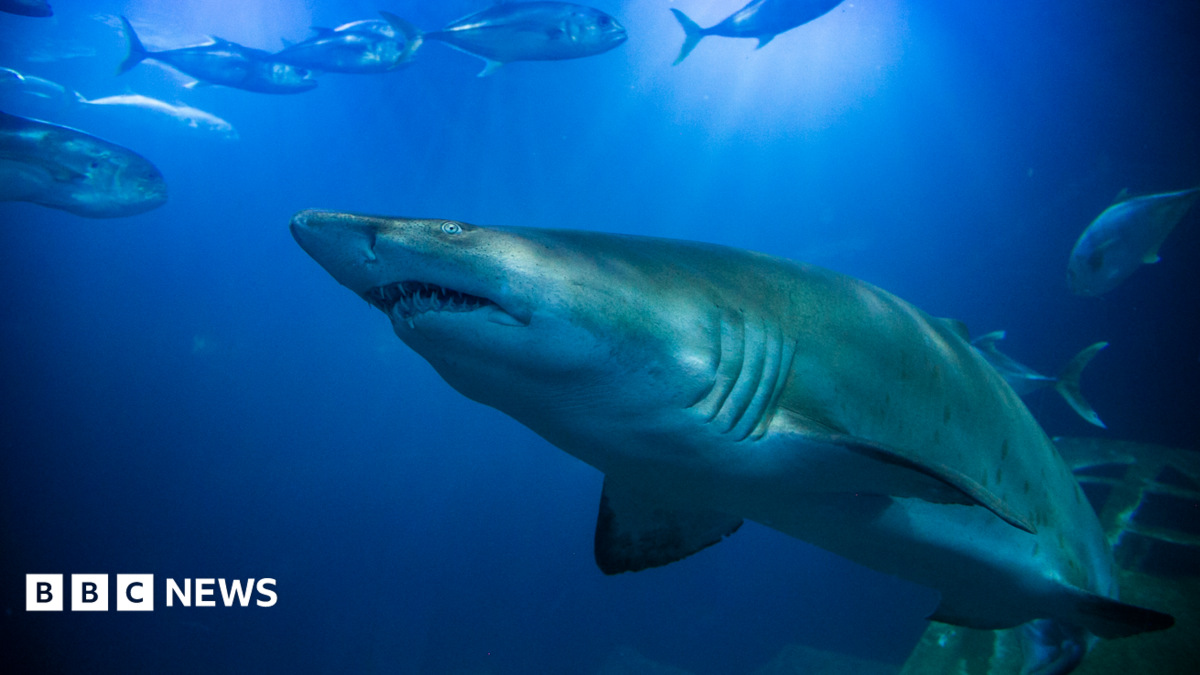
Staff at Plymouth Sea Life Centre have paid tribute to a sand tiger shark that was believed to be nearly 30 years old, marking the end of a long and impactful tenure at the facility. The shark, which had been a central figure in public education and outreach, died recently after a period of declining health. Its passing has prompted a wave of remembrance among staff, visitors, and marine biology enthusiasts.
The sand tiger shark, scientifically known as Carcharhinus plumbeus, is a species commonly found in temperate and tropical waters across the globe. It is known for its distinctive appearance, with a long, slender body and a prominent, triangular dorsal fin. Despite its fearsome appearance, sand tiger sharks are generally not aggressive toward humans and are often misunderstood due to media portrayals and cultural myths.
Long-Term Resident and Public Educator
The shark was one of the longest-lived residents at Plymouth Sea Life Centre, a facility established in 1973 to promote marine conservation and public awareness. According to staff reports, the animal was first introduced to the centre in the early 1990s, and its presence became a cornerstone of educational programs focused on shark biology and oceanic ecosystems.
Over the years, the shark became a familiar face for visitors, particularly children and school groups. It was frequently featured in guided tours, where staff used the animal as a living example to explain how sharks differ from the popular image of predatory, man-eating creatures. The centre emphasized that sand tiger sharks are solitary, generally non-aggressive, and play a vital role in maintaining the balance of marine food webs.
One staff member described the shark as 'a bridge between science and public perception.' 'It wasn't just a display animal,' said Sarah Thompson, a senior educator at the centre. 'It helped people understand that sharks are not mindless predators. They are intelligent, complex animals with specific behaviors and ecological functions.'
Age and Lifespan in the Wild
While the exact age of the shark at the time of its death has not been officially confirmed, staff at Plymouth Sea Life Centre have estimated that it was close to 30 years old. This estimate is based on growth patterns observed in the animal's physical characteristics, such as fin development and body size, as well as historical records of its health and activity levels.
Scientists have long noted that sand tiger sharks have relatively long lifespans, with some individuals living up to 30 years or more in the wild. A 2018 study published in the journal Marine and Freshwater Research found that sand tiger sharks in Australian waters exhibited growth rates consistent with a lifespan of 25 to 30 years. The study also highlighted that these sharks are capable of living in captivity for extended periods, especially when provided with optimal environmental conditions.
However, the age of the Plymouth shark remains an approximation. The centre has not released a formal scientific assessment of its age, and no independent verification has been conducted. The estimate is derived from observational data and is consistent with known biological patterns, but it is not a definitive measurement.
Role in Public Outreach and Myth-Busting
One of the shark’s most significant contributions was its role in public education. The centre has long maintained that many people hold misconceptions about sharks, particularly regarding their behavior, intelligence, and danger to humans. The sand tiger shark became a symbol of the centre’s mission to correct these myths through direct, hands-on experiences.
During school visits, the shark was often used to demonstrate how sharks use their senses to detect movement and vibrations in the water. Staff would explain that sharks do not rely on sight alone and that their behavior is shaped by environmental cues and social patterns. These lessons helped shift public perception, especially among younger audiences.
Public feedback from visitors has indicated a noticeable change in attitudes toward sharks after the shark’s presence. A 2022 survey conducted by the centre found that 78% of visitors reported a greater understanding of shark biology after interacting with the animal. The survey also noted a significant reduction in fear-based responses when asked about shark encounters in the ocean.
Health and Care in Captivity
Like all marine animals in captivity, the sand tiger shark required consistent monitoring of its health, diet, and environmental conditions. The centre maintains a dedicated team of marine biologists and veterinarians who oversee the care of its residents. The shark was known to be active and responsive to stimuli, and its feeding habits were regularly documented.
Over time, staff observed a gradual decline in the shark’s activity levels, which prompted a veterinary review in early 2024. The review indicated that the animal was experiencing age-related changes, including reduced mobility and decreased appetite. Despite efforts to improve its environment and diet, the condition continued to deteriorate.
The centre has not disclosed the specific cause of death, but it has stated that the animal passed away peacefully under the care of staff. No signs of illness or trauma were reported during the final days. The centre emphasized that the death was a natural outcome of aging, consistent with the species’ known lifespan.
Legacy and Ongoing Impact
The death of the sand tiger shark has prompted a reflection on the role of long-term animal residents in public education. While such animals are not immune to the challenges of captivity, their presence can have a lasting impact on public understanding of marine life.
At Plymouth Sea Life Centre, the shark was not only a biological specimen but a cultural symbol. It appeared in promotional materials, educational videos, and even in annual reports. Its image has been used in outreach campaigns aimed at reducing shark-related fear and promoting ocean conservation.
Following the announcement of its death, the centre has announced plans to continue its educational programs with a new generation of marine species. The staff have also committed to increasing transparency about the age and health of all long-term residents, ensuring that public trust is maintained.
Marine biologists have noted that the death of such a long-lived animal is not uncommon in captivity, especially when the species has a slow reproductive cycle and limited genetic diversity. However, the emotional and educational value of the shark’s presence remains significant.
Scientific and Conservation Context
While the Plymouth shark was not part of any formal scientific research project, its presence contributed to broader efforts to improve public awareness of shark biology. The species is classified as 'Near Threatened' by the International Union for Conservation of Nature (IUCN), due to overfishing and habitat degradation. Public education initiatives like those at Plymouth play a critical role in fostering conservation awareness.
Sharks are often overlooked in environmental policy discussions, despite their importance in maintaining healthy marine ecosystems. The sand tiger shark, in particular, serves as a key indicator species for the health of coastal environments. Its decline in populations has been linked to bycatch and targeted fishing, which threaten the stability of marine food chains.
Although the Plymouth shark did not participate in any direct research, its role in public education has indirectly supported broader conservation goals. By dispelling myths and promoting accurate information, it helped create a more informed public that is more likely to support marine protection efforts.
Experts at the centre have stated that such educational experiences are essential for building public support for marine conservation. 'When people understand sharks as part of a balanced ecosystem, they are more likely to support policies that protect them,' said Dr. James Reed, a marine biologist affiliated with the centre.
As the global demand for seafood and marine resources continues to grow, the need for public education about marine life remains urgent. The legacy of the Plymouth shark may thus extend beyond its physical life, influencing how future generations view sharks and the oceans.