
Lead
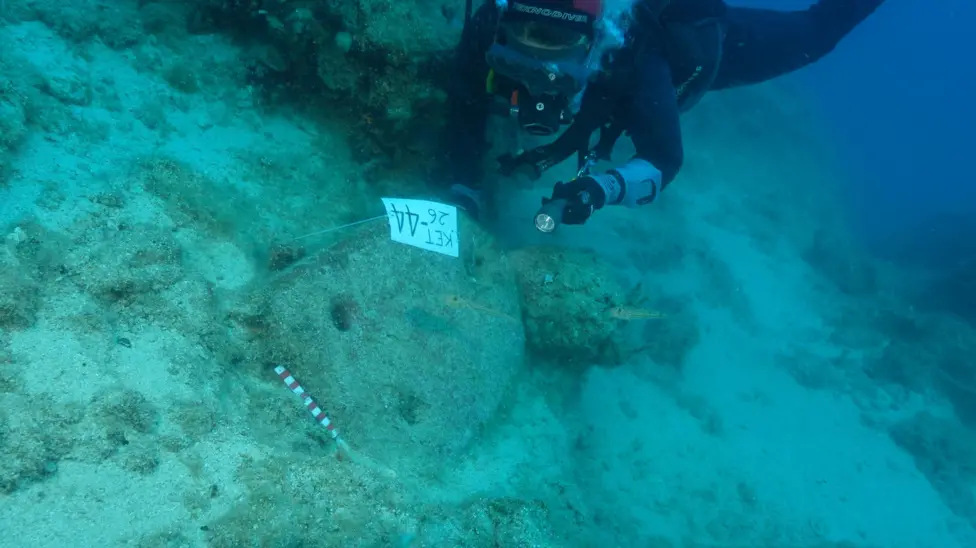
Off the eastern coast of Turkey, archaeologists have uncovered what may be the world's oldest known shipwreck, dating to the Early Bronze Age—approximately 4,700 years ago. The discovery, confirmed through underwater surveys and initial analysis, marks a significant milestone in understanding ancient maritime activity in the Eastern Mediterranean. The wreck is located in the Aegean Sea, near the modern-day coast of Turkey, and appears to be a vessel made of wood, with structural remains preserved in sediment.
The find was initially detected during a systematic underwater survey conducted by a team of archaeologists affiliated with the University of Istanbul and the Turkish Ministry of Culture and Tourism. The vessel was identified through sonar imaging and subsequent dives, where researchers observed a series of wooden fragments, hull sections, and debris consistent with a shipwrecked vessel. The age of the wreck has been estimated based on stratigraphic layers and radiocarbon dating of organic materials found in association with the site.
Historical Context of Early Bronze Age Maritime Activity
The Early Bronze Age, spanning from around 3300 to 2000 BCE, was a period of significant cultural and technological development across Eurasia. In the Eastern Mediterranean, this era saw the rise of early urban centers, the development of metallurgy, and the expansion of trade networks. The discovery of a shipwreck from this period suggests that seafaring was not only possible but also part of established economic and social systems.
Historical records from ancient Mesopotamia and the Levant indicate that maritime trade routes were already in use during the Early Bronze Age. For instance, the Ugaritic texts from the 15th century BCE reference seafaring activities, and archaeological evidence from sites such as Çatalhöyük and Hattusa suggests early forms of coastal trade. The Turkish shipwreck may represent a vessel that participated in such networks, possibly transporting goods like pottery, metals, or agricultural products between Anatolia and the Levant.
While no direct written records from the Early Bronze Age describe shipwrecks in the region, the presence of a well-preserved wooden structure implies that shipbuilding techniques were advanced enough to construct vessels capable of navigating coastal waters. The vessel’s size—estimated at around 10 to 15 meters in length—suggests it was likely used for regional transport rather than long-distance voyaging.
Methodology and Scientific Analysis
The identification of the wreck relied on a combination of remote sensing and direct underwater exploration. Sonar scans conducted in 2023 revealed a distinct anomaly in the seabed, prompting a targeted dive operation. The team used a remotely operated vehicle (ROV) to inspect the site and collect samples of wood and sediment. These samples were then sent to laboratories in Istanbul and Ankara for radiocarbon dating and material analysis.
Initial radiocarbon dating of organic material from the site, including wooden fragments and charred residues, has yielded a date range of 3300 to 3500 BCE. This places the wreck firmly within the Early Bronze Age, making it one of the oldest known maritime structures in the world. The analysis has not yet confirmed whether the vessel was intentionally sunk or lost due to a navigational accident, but the structural integrity of the remains suggests it was likely a functional vessel at the time of its sinking.
Wooden remains from ancient shipwrecks are rare due to the degradation of organic materials over millennia. The preservation of such material in the Turkish coastal environment—characterized by low salinity and stable sediment layers—may explain the exceptional state of the wreck. This environmental condition is critical for the long-term preservation of organic artifacts, and it provides a rare window into the materials and construction techniques used in early seafaring.
Comparison with Other Ancient Shipwrecks
While several ancient shipwrecks have been discovered in the Mediterranean, most date to later periods. For example, the shipwreck of the Hellenistic-era vessel found near the Greek island of Crete dates to around 300 BCE, and the Roman-era wreck discovered off the coast of Italy is estimated to be around 2,000 years old. These vessels, though significant, are considerably younger than the Turkish find.
Other notable maritime discoveries include the Thera shipwreck in Greece, which dates to the 13th century BCE, and the wreck of the ancient Phoenician ship found off the coast of Lebanon, estimated to be around 1,000 years old. These examples demonstrate that while seafaring was common in the ancient Mediterranean, the earliest known evidence of such activity remains limited.
The Turkish wreck, if confirmed as the oldest, would represent a major shift in the timeline of human maritime history. It would suggest that organized seafaring and shipbuilding were established in the Eastern Mediterranean much earlier than previously thought. This could challenge existing models of early human development, particularly in relation to the spread of technology and trade across coastal regions.
Implications for Understanding Ancient Trade and Navigation
The discovery raises important questions about the nature of early maritime trade and navigation. If a vessel from the Early Bronze Age was capable of navigating coastal waters, it implies that early societies had developed navigational skills, possibly using celestial cues, wind patterns, or landmarks. Such knowledge would have been essential for trade between inland settlements and coastal ports.
Moreover, the presence of a shipwreck in a region that was once a crossroads of cultural exchange—connecting Anatolia, the Levant, and the Aegean—suggests that maritime routes were already established during this period. This could indicate that early civilizations were not only engaged in land-based trade but also in organized, long-term maritime commerce.
While the current evidence does not confirm the cargo of the vessel, the location and context of the wreck suggest it may have been part of a trade network that connected Anatolian settlements with other early urban centers. Such networks would have facilitated the exchange of goods, ideas, and technologies, contributing to the development of early civilizations.
Challenges in Verification and Future Research
Despite the promising findings, several challenges remain in confirming the age and significance of the wreck. The radiocarbon dating process is still ongoing, and further analysis is needed to verify the exact age and origin of the vessel. Additionally, the full scope of the wreck’s structure and contents has not yet been fully explored.
Another limitation is the lack of direct archaeological context. For instance, no inscriptions, tools, or artifacts have been recovered from the site that could provide definitive evidence of the vessel’s use or ownership. Without such material, the interpretation of the wreck remains speculative, though grounded in scientific methodology.
Future research will likely involve more detailed dives, the use of advanced imaging technologies, and collaboration with international archaeological institutions. The Turkish team has already initiated a partnership with the British Museum and the University of Oxford to support further analysis and to share findings with the global academic community.
Additionally, the discovery has sparked interest from maritime archaeology communities worldwide. Experts from institutions such as the Mediterranean Archaeological Institute and the Institute of Archaeology at the University of Athens have expressed interest in contributing to the research, particularly in the areas of shipbuilding techniques and early navigation systems.
Broader Significance and Future Perspectives
The Turkish shipwreck discovery, while still under investigation, has the potential to reshape our understanding of early human maritime activity. If confirmed as the oldest known shipwreck, it would represent a pivotal moment in the history of human innovation and mobility.
It underscores the importance of continued underwater exploration in regions with rich archaeological potential. The Eastern Mediterranean, with its complex geography and long history of human settlement, remains one of the most promising areas for uncovering ancient maritime history. As technology improves—such as autonomous underwater vehicles and high-resolution sonar systems—the likelihood of discovering more early maritime sites increases.
Moreover, the find highlights the value of interdisciplinary collaboration in archaeology. The integration of geophysics, material science, and historical records allows researchers to build more accurate and nuanced narratives of the past. This approach is essential for interpreting complex historical phenomena such as early seafaring and trade.
As the scientific community continues to analyze the Turkish wreck, the discovery may inspire new research directions, including the search for other early shipwrecks in the region. It also emphasizes the need for better preservation and protection of underwater archaeological sites, many of which remain unexplored and vulnerable to environmental degradation and human activity.
While the current evidence points to a vessel from the Early Bronze Age, the full implications of this discovery will only become clear through continued research. For now, the Turkish shipwreck stands as a remarkable testament to human ingenuity and the enduring legacy of early maritime civilizations.