
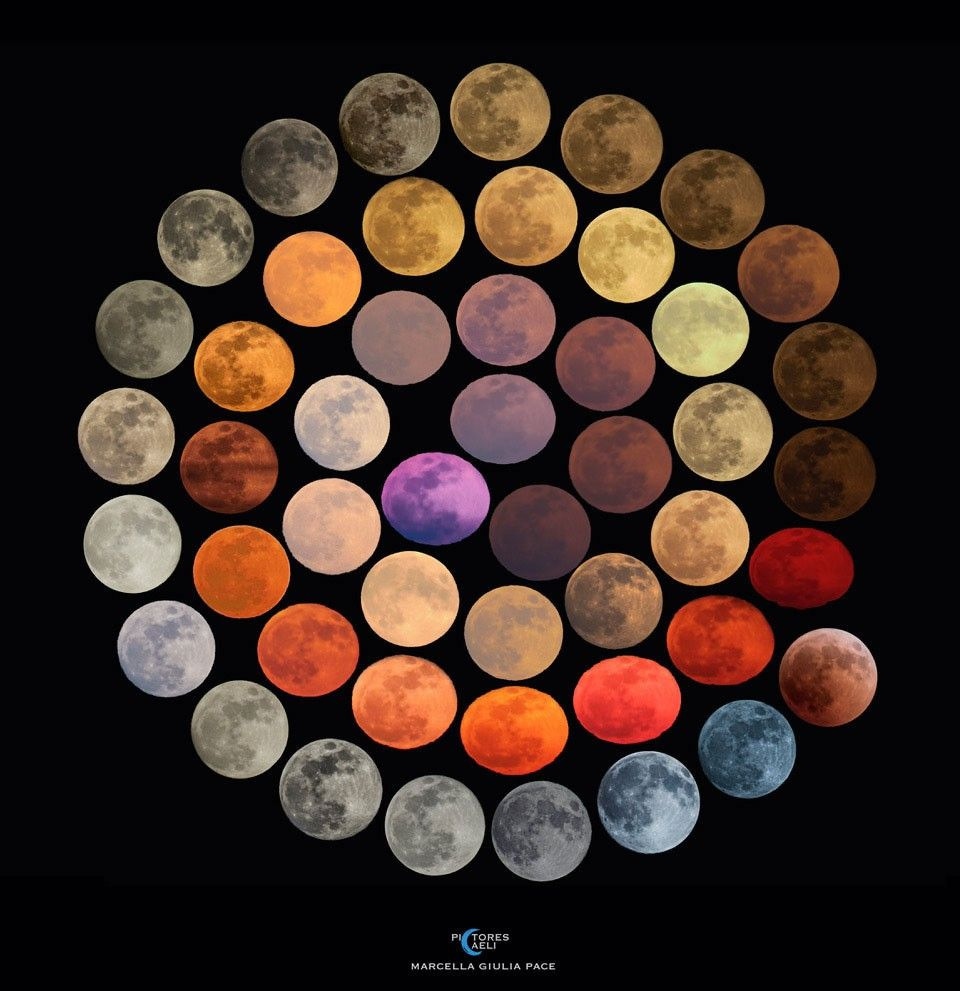
The Astronomy Picture of the Day (APOD), a daily feature hosted by NASA, presents a new image or photograph of the cosmos along with a brief scientific explanation. On November 1, 2026, the featured image is titled 'Colors of the Moon.' This visual presentation illustrates the Moon's surface as it reflects sunlight, emphasizing the subtle variations in hue that result from different compositions of regolith and surface minerals.
Understanding Lunar Surface Reflection
The Moon, Earth's only natural satellite, lacks an atmosphere and thus does not scatter light in the same way that Earth does. As a result, sunlight strikes the lunar surface directly, with minimal diffusion. The color of the Moon as seen from Earth is primarily a result of the reflection of sunlight off the surface, which is composed mainly of fine-grained silicate minerals and iron-rich compounds.
These materials absorb certain wavelengths of light and reflect others. The dominant reflection occurs in the visible spectrum, particularly in the blue to green range, which gives the Moon its characteristic grayish appearance. However, the APOD image reveals that under specific lighting conditions—such as during dawn or dusk—the Moon can exhibit a range of colors, from pale yellow to a faint orange, due to the scattering of longer wavelengths of light.
The phenomenon is similar to Rayleigh scattering, which causes the sky to appear blue on Earth. On the Moon, however, the absence of an atmosphere means that such scattering does not occur. Instead, the color variation is driven by the composition of surface materials and the angle at which sunlight hits the surface.
Scientific Basis of Lunar Coloration
The APOD feature is authored by a professional astronomer and is designed to communicate complex scientific concepts in an accessible format. In this case, the explanation focuses on how the Moon's surface reflects light differently depending on the angle of incidence and the mineral content of the regolith.
Regolith, the layer of loose soil and rock covering the Moon's surface, contains minerals such as ilmenite, plagioclase feldspar, and pyroxene. These minerals have distinct absorption and reflection characteristics. For instance, ilmenite absorbs red light more strongly than blue, leading to a slightly reddish tint in certain regions. Plagioclase feldspar, on the other hand, reflects light more evenly, contributing to a more neutral gray appearance.
These mineral variations are not uniform across the Moon. The surface is divided into regions with different geological histories, such as the highlands and the maria. The highlands, which are older and more heavily cratered, tend to have a more varied mineral composition and can appear slightly darker or more reddish. The maria, large basaltic plains formed by ancient volcanic activity, are generally smoother and reflect light more uniformly, resulting in a more consistent gray tone.
Lighting Conditions and Visual Perception
The APOD image was likely captured using high-resolution imaging techniques, possibly from orbiting spacecraft or ground-based telescopes. The specific lighting conditions under which the image was taken—such as the phase of the Moon and the time of day—play a critical role in how the surface appears.
During the early morning or late evening, when the Moon is near the horizon, sunlight strikes the surface at a low angle. This low-angle illumination enhances the contrast between light and shadow, making surface features more pronounced. In such conditions, the longer wavelengths of light (red and orange) are more visible, leading to a perception of warmer tones in the lunar surface.
Additionally, human visual perception can influence how we interpret lunar colors. The human eye is more sensitive to certain wavelengths, and under dim lighting, the brain may interpret subtle color shifts as more vivid than they actually are. This perceptual effect, combined with actual surface reflectivity, contributes to the observed color variations in the APOD image.
Historical Context and Public Engagement
The APOD program, launched in 1995, has become a cornerstone of public engagement in astronomy. Each day, it presents a new image from the universe, accompanied by a short explanation written by a professional astronomer. The content spans a wide range of topics—from planetary surfaces to deep-space phenomena—and is designed to inspire curiosity and scientific literacy among the general public.
Since its inception, the APOD has featured over 20,000 images and explanations. The 'Colors of the Moon' entry is part of a broader effort to illustrate how celestial bodies interact with light. By focusing on a familiar object like the Moon, NASA makes complex scientific principles more relatable and accessible.
The feature is not only educational but also serves as a bridge between scientific research and public understanding. It demonstrates that even objects as simple as the Moon contain rich scientific content, and that everyday observations can be the foundation of deeper scientific inquiry.
Scientific Implications and Future Research
While the Moon's surface color is primarily a result of natural physical processes, studying these variations helps scientists understand the geological history of the Moon. For example, identifying regions with specific mineral compositions can provide insights into past volcanic activity or meteorite impacts.
Future missions, such as NASA's Artemis program and international lunar exploration efforts, may use similar color-based analysis to map surface composition in greater detail. High-resolution imaging and spectral analysis could allow scientists to detect trace elements and assess the distribution of resources like water ice or rare minerals.
Moreover, the Moon's surface coloration serves as a model for understanding how other airless bodies—such as asteroids or comets—might reflect light. By studying the Moon, researchers can develop better models for interpreting the appearance of other celestial bodies without atmospheres.
Limitations and Interpretations in the APOD Feature
It is important to note that the APOD feature, while scientifically grounded, does not provide detailed data or measurements. The image and explanation are artistic and interpretive in nature, designed for public understanding rather than rigorous scientific analysis.
The APOD does not include metadata such as exact wavelengths, reflectance values, or spatial resolution. These technical details are typically reserved for scientific publications or mission reports. As such, the 'Colors of the Moon' image should be viewed as a visual representation of a scientific concept, not a data-driven observation with precise measurements.
Additionally, the feature does not address the possibility of human-made coloration or contamination. The Moon's surface has not been significantly altered by human activity, and any observed coloration remains a natural phenomenon.
Public and Educational Value
The APOD program plays a vital role in science communication. By presenting accessible, visually engaging content, it fosters a deeper appreciation for astronomy among diverse audiences, including students, educators, and the general public.
Each APOD entry is curated by a team of scientists and educators who ensure accuracy and clarity. The explanations are written in a way that avoids technical jargon while still conveying the underlying science. This balance makes the content both informative and engaging.
For educators, the APOD serves as a valuable teaching tool. Teachers can use the images and explanations to introduce topics such as light reflection, planetary geology, and the scientific method in a classroom setting. The daily nature of the feature also encourages consistent engagement with scientific content.
For the public, the APOD offers a daily window into the universe. It transforms abstract scientific concepts into tangible, observable phenomena. The Moon, being one of the most familiar celestial bodies, provides a perfect entry point for learning about the broader principles of astronomy.
As the APOD continues to evolve, it remains a trusted source of scientific imagery and explanation. Its focus on accessible science ensures that the public remains informed and inspired by the wonders of the cosmos.