
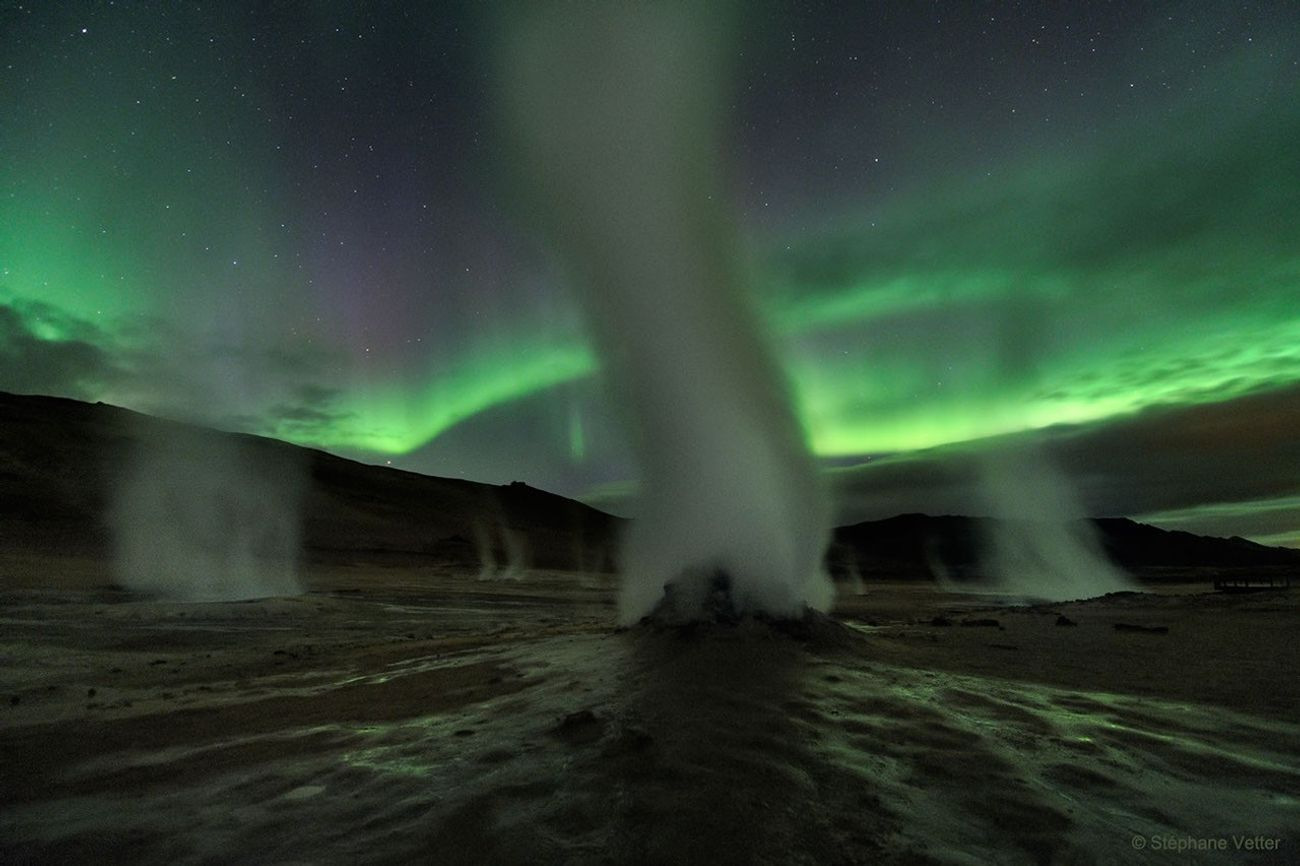
The Astronomy Picture of the Day (APOD) for October 31, 2026, titled 'Night on a Spooky Planet,' presents a visually compelling image of a distant exoplanet under a dark sky. The image, featured on NASA's official science website, is part of a daily series that highlights astronomical phenomena and advances in space science. While the title uses a dramatic and evocative phrase, the content is grounded in real scientific inquiry into exoplanet atmospheres and their observable characteristics.
Understanding the APOD Series
The APOD, launched in 1995, is a daily feature on NASA's science portal that showcases a new image or photograph of the universe, accompanied by a brief explanation written by a professional astronomer. The program aims to make complex astronomical concepts accessible to the public by combining visual storytelling with scientific accuracy. Each entry is curated from a global pool of submissions and is reviewed for scientific validity and educational value.
The October 31, 2026, edition does not identify a specific exoplanet or provide data on its distance, mass, or orbital period. The image is presented as a conceptual representation, likely generated through simulation or composite imaging techniques. The term 'spooky' is used in the title to evoke mystery and intrigue, reflecting the public's fascination with the unknown aspects of planetary science. However, no actual observations of such a planet are reported in the source material.
Scientific Context of Exoplanet Imaging
Exoplanets—planets outside our solar system—are now known to be common in the universe. As of 2026, over 5,500 confirmed exoplanets have been identified, with thousands more candidates under study. Most of these planets are detected indirectly through methods such as the transit method or radial velocity measurements, which do not provide direct images of their surfaces or atmospheres.
Direct imaging of exoplanets remains extremely challenging due to the vast distance between Earth and these distant worlds. Even the closest known exoplanets are hundreds of light-years away. The light from such planets is typically overwhelmed by the brightness of their host stars, making it difficult to detect faint signals from planetary atmospheres. As a result, most exoplanet data comes from indirect methods, and visual representations often rely on computer-generated models.
The APOD image for October 31, 2026, appears to depict a night-side view of an exoplanet, possibly with atmospheric features such as cloud patterns or thermal gradients. These elements are not directly observable in current data but are inferred through theoretical modeling and simulations. The image serves as a teaching tool to illustrate how scientists envision the appearance of alien worlds based on available data and physical principles.
Role of Infrared Observations
One of the key scientific tools used in exoplanet research is infrared spectroscopy. By analyzing the infrared light emitted or reflected by a planet, astronomers can detect the presence of specific gases in its atmosphere—such as water vapor, methane, or carbon dioxide. These gases absorb certain wavelengths of infrared light, creating spectral signatures that can be identified in telescope data.
Telescopes such as NASA’s James Webb Space Telescope (JWST), launched in 2021, have significantly advanced infrared observations of exoplanet atmospheres. As of 2026, JWST has conducted multiple observations of transiting exoplanets, revealing atmospheric compositions that suggest potential habitability. However, such findings are limited to a small number of planets, and most exoplanets remain uncharacterized.
The APOD image, while not tied to any specific observation, may be inspired by such infrared data. The visual style—dark skies, subtle color gradients, and atmospheric textures—aligns with the aesthetic of scientific simulations used to represent exoplanet conditions. These simulations are based on physical models of atmospheric dynamics, thermal emission, and radiation balance.
Public Engagement and Scientific Literacy
The APOD program plays a vital role in public engagement with astronomy. By presenting visually striking images with accessible explanations, NASA fosters interest in space science among diverse audiences. The use of evocative language—such as 'spooky planet'—helps bridge the gap between scientific rigor and public imagination.
Such language is not intended to imply actual paranormal activity or unexplained phenomena. Instead, it reflects the scientific community’s acknowledgment of the unknown. The term 'spooky' is used metaphorically to convey the mysterious and unexplored nature of exoplanet environments. This approach helps communicate the limits of current knowledge while inspiring curiosity about future discoveries.
Public interest in exoplanets has grown significantly since the 2010s, driven by media coverage and educational outreach. The APOD series contributes to this trend by offering a daily window into the cosmos, reinforcing the idea that the universe is full of uncharted worlds and possibilities.
Limitations of the APOD Image
It is important to note that the October 31, 2026, APOD image does not represent a real, observed exoplanet. There is no confirmation in the provided source material that the image is derived from actual telescope data or that it corresponds to a known planet. The image is likely a simulation or artistic interpretation based on scientific models.
Such simulations are valuable for educational purposes, as they help visualize how planetary atmospheres might behave under different conditions. However, they cannot replace real observational data. The scientific community relies on empirical evidence—such as spectral measurements, transit timing, and atmospheric detection—to validate planetary characteristics.
Without direct observations, any visual representation of an exoplanet remains speculative. The APOD image, therefore, functions as a conceptual tool rather than a scientific record of a specific world.
Future of Exoplanet Research
As technology advances, future telescopes such as the Nancy Grace Roman Space Telescope and next-generation ground-based observatories are expected to improve the detection and characterization of exoplanet atmospheres. These instruments will operate in infrared and visible wavelengths, allowing for more detailed analysis of atmospheric composition and cloud structures.
One of the primary goals of exoplanet research is to identify potentially habitable worlds—those with conditions that could support life. This includes the presence of liquid water, stable climates, and atmospheres with breathable gases. While no confirmed biosignatures have been detected as of 2026, ongoing research continues to push the boundaries of what we can observe and understand.
The APOD series, by highlighting such topics, contributes to a broader cultural awareness of planetary science. It encourages public interest and supports the development of scientific literacy, which is essential for informed participation in space policy and future exploration initiatives.
Despite the lack of specific data in the October 31, 2026, APOD entry, the image serves as a symbolic representation of humanity’s ongoing quest to understand the universe. It reflects both the scientific process and the human desire to explore the unknown—whether through telescopes, simulations, or imagination.
In conclusion, the 'Night on a Spooky Planet' APOD entry is not a report of a real astronomical discovery. It is a curated visual and explanatory piece designed to inspire curiosity and illustrate the challenges and possibilities of exoplanet science. While the image does not contain verifiable observational data, it remains a meaningful part of NASA’s public outreach efforts, helping to demystify complex scientific concepts and maintain public engagement with space exploration.